

How to Stop Seeking Validation
There comes a point when you realise that some of your choices may not actually be yours. You may choose an outfit because someone else likes it, change your opinion because you are afraid of being judged, or constantly look for reassurance before trusting your own decisions. The hardest part is that you may not even know when this habit began. For many of us, the need for validation starts in childhood. We are often taught, directly or indirectly, that being good, successful, well-behaved, attractive, or academically strong will make people appreciate us. Study well, and people will talk about you. Behave well, and everyone will like you. Look good, and people will treat you differently. These ideas may sound harmless, but over time, they can teach us to connect our worth with other people’s approval.That is often where seeking validation begins. We slowly learn to think, “If I do this well, they will like me,” or “If I look this way, people will accept me.” Eventually, we may become so used to seeking approval that we forget to ask ourselves a much more important question:
What do I actually want?
What Does Seeking Validation Really Mean?
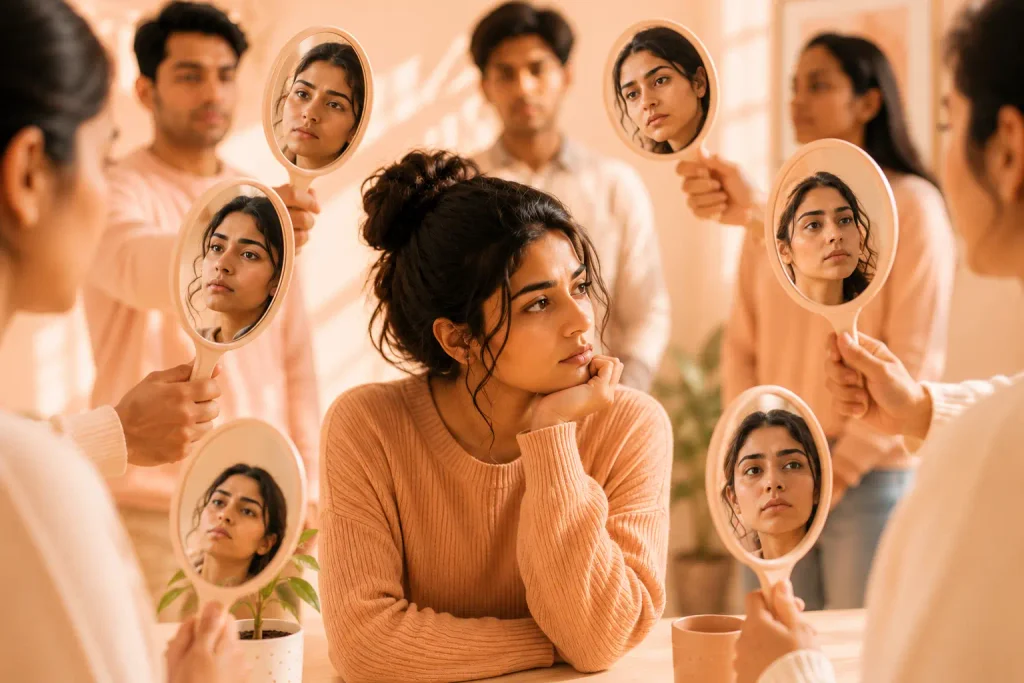
Seeking validation means looking outside yourself for reassurance that your choices, appearance, behaviour, feelings, or achievements are acceptable or worthy. Wanting appreciation is not automatically unhealthy. It is completely human to feel happy when someone compliments us, recognises our effort, or supports a decision we have made. The problem begins when appreciation turns into dependence. There is a big difference between saying, “It feels good that they liked my decision,” and thinking, “I cannot feel good about my decision unless they like it.” One allows you to enjoy appreciation; the other gives someone else control over your confidence. Validation itself is not the enemy. Like many things in life, it can be healthy when it stays within a reasonable limit. The problem begins when it starts controlling your choices, your relationships, your self-image, or your peace of mind.
Why Do We Become Dependent on Other People’s Approval?
Childhood conditioning can be one reason, but it is not the only one. Family expectations, social standards, relationships, comparison, workplaces, and social media can all reinforce our need for approval. Society has also created certain ideas about what a “perfect” person should look like or how they should behave. Women are often expected to look a certain way, while men are given their own set of expectations. We are surrounded by ideas about height, skin tone, body type, success, relationships, careers, and lifestyles. When we constantly measure ourselves against these standards, we may start changing ourselves simply to fit in. This is also where validation can quietly turn into people-pleasing. At first, you may simply want people to like you. Eventually, you may begin changing your choices, hiding your preferences, saying yes when you want to say no, or putting everyone else’s comfort before your own. And sometimes, you do not even notice that it is happening.
When Does Validation Turn Into People-Pleasing?
People-pleasing can develop so gradually that it becomes difficult to identify. You may start by wanting to make someone happy, but eventually their happiness becomes more important than your own comfort. Relationships can make this particularly complicated. Imagine that your partner really likes a certain type of outfit. You start wearing similar clothes more often because you know they like them. Slowly, you stop wearing the outfits you personallyenjoy. At some point, the question is no longer, “Do I like this?” but, “Will they like me if I wear this?” That small shift matters. Your preferences have quietly become secondary to someone else’s approval. The same thing can happen with friendships, family relationships, workplaces, and even everyday decisions. You may constantly ask others what they think before deciding what you want. You may fear disappointing people so much that you stop expressing your real opinions. That is when validation stops being simple appreciation and starts becoming a form of control.
Social Media Has Taken Validation to Another Level
Social media has taken external validation to an entirely different level. Likes, comments, followers, views, shares, and reach can make approval feel measurable. Once you receive it, you may start wanting more. Sometimes, I think of social media validation like fungus—it keeps growing when you continue feeding it. The more attention you give it, the more it can demand from you. However, social media is not entirely negative. One thing I genuinely appreciate about it is the way people are challenging traditional beauty standards. People who are short, dark-skinned, chubby, differently shaped, or simply different from society’s idea of “perfect” are increasingly showing themselves as they are and saying, “This is me, and I am okay with it.” That is a much healthier direction. You should not need thousands of likes to prove that you are worthy. At the same time, you should not need society to approve of your appearance before you are allowed to accept yourself. Some things are simply right because they are right. Helping someone, being honest, refusing to intentionally hurt another person, or treating people with kindness should not require public approval to become valuable.
How to Stop Seeking Validation From Others

* Start by Accepting That You Seek Validation
If you want to understand how to stop seeking validation, the first step is awareness. You cannot change a pattern that you refuse to acknowledge. Admitting that you seek validation does not mean something is wrong with you. It means you have become aware of a habit that may no longer be serving you. Pay attention to the moments when you look outside yourself for reassurance. Notice when you change your decision because someone disagrees, when criticism immediately makes you doubt yourself, or when someone’s reaction determines how you feel about your own choices. You do not have to fix everything in one day. You simply have to start noticing.
* Calm Your Mind Before You Try to Change Yourself
Coming out of the validation trap is difficult. You cannot simply wake up one morning and decide that you will never care about anyone’s opinion again. Before changing your behaviour, give yourself some mental space. A restless mind will continue looking outside itself for reassurance. A calmer mind gives you the opportunity to understand what you genuinely want. This process requires patience. You have probably spent years learning to seek approval, so give yourself time to unlearn it.
* Make Your Own Decisions and Own Them
Every decision you make will not be perfect. That is okay. The goal is not to make perfect decisions; it is to become comfortable making your own decisions and taking responsibility for them. If something goes wrong, own it. Learn from it. Do not immediately search for someone else to blame. That is how self-trust develops. You make a choice, experience the result, learn something, and become more confident in making the next choice.
* Replace “What Will People Say?” With “How Do I Feel About This?”
The thought “What will people say?” may continue to appear. Instead of fighting it every time, try answering it with another question:
“How do I feel about this?”
At the end of the day, you are the person who has to live with your decisions. People may discuss your choice for a few minutes, but you are the one who experiences its consequences. This does not mean ignoring everyone. It simply means giving your own voice equal importance.
* Set Boundaries Around People-Pleasing
Saying no can feel strange when you are used to pleasing everyone. You may feel guilty. You may worry that someone will be disappointed. You may even wonder whether you are becoming selfish. But discomfort does not always mean that you are doing something wrong. Sometimes, it simply means you are doing something unfamiliar. Ask yourself whether pleasing someone is genuinely necessary or whether you are doing it only because you are afraid of their reaction. You do not need to give every person the same amount of access to your time, attention, and energy.
* Put Limits on Social Media Validation
You do not necessarily need to leave social media. Instead, become more conscious of why you use it.
Ask yourself whether you are sharing something because you genuinely want to share it or because you are waiting for people to confirm that you look good, made the right decision, or achieved something worthwhile.
Set your own boundaries. Decide how much external validation is healthy for your mental and emotional well-being.
* Learn From Criticism Without Letting Rejection Define You
Not every criticism deserves a reaction, and not every rejection deserves self-doubt. If criticism contains something useful, listen to it. If it shows you something that genuinely needs improvement, accept it and work on yourself. But if someone’s opinion is simply meant to hurt you or has nothing valuable to teach you, you are allowed to leave it behind. Rejection can hurt. That does not mean you are not good enough. Sometimes the healthiest response is simply, “Okay, this was not for me,” and then moving on to the next project, opportunity, relationship, or chapter.
What Happens When You Stop Seeking Validation?

When you stop depending so heavily on other people’s approval, you do not suddenly understand everything about life. Instead, you become more willing to understand yourself every day. You become more peaceful, but protecting that peace becomes a daily practice. You begin recognising which relationships deserve your energy and which ones do not. Some relationships may disappear, almost like beads falling away from a broken necklace. It can be painful, especially when you have spent years trying to keep those relationships together through people-pleasing. But the relationships that remain often become more genuine. You may also realise that not every relationship needs to be cut off. Some people around you may genuinely care about you, while others may mostly approach you when they need something. Once you recognise that difference, you stop wasting the same amount of energy on everyone. Comparison also begins to lose its power. I often think of life as a question paper that is different for every person. Someone else’s circumstances, opportunities, struggles, family, resources, and experiences are different from yours. So comparing your answers to someone else’s paper will never give you a fair result. You start accepting that this is life. Everyone is solving a different question paper. Criticism and rejection also become easier to handle. You listen carefully instead of reacting immediately. If there is something you need to improve, you accept it. If there is nothing useful in it, you let it go. And you still prove yourself—but not to everyone else. You prove yourself to yourself.
Self-Validation Is a Daily Practice
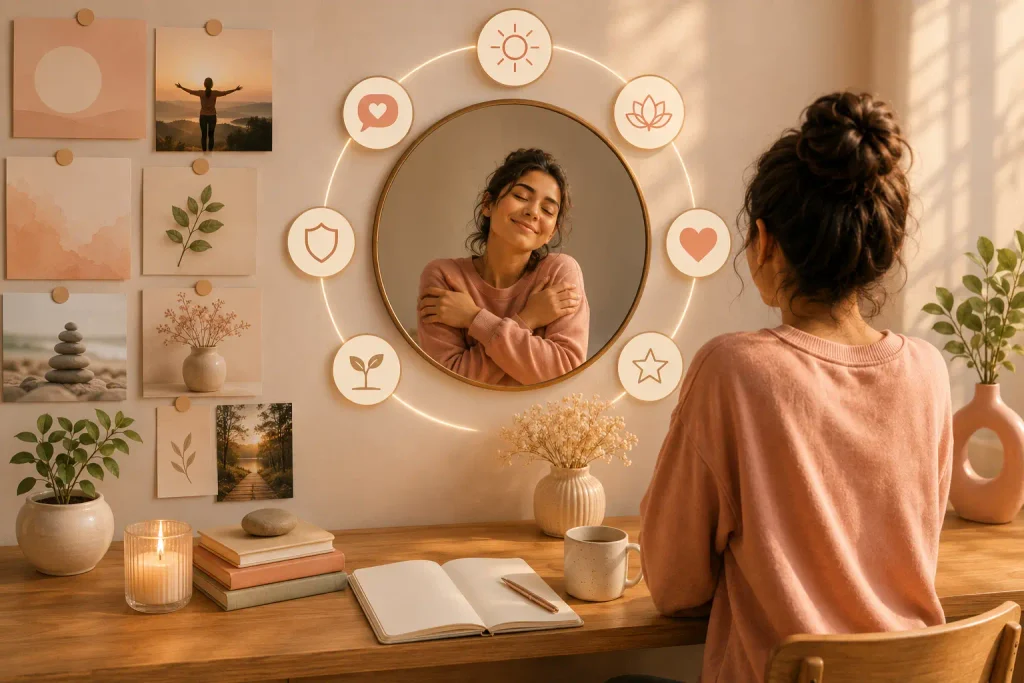
Learning how to stop seeking validation does not mean you will never care what anyone thinks again. Even after making progress, certain comments may still affect you. The difference is what you do with those feelings. You may hear something that hurts. You may think about it for a while. But then you can remind yourself of how far you have come, what you have achieved, and how much you have already learned about accepting yourself. That is progress. Self-acceptance sounds simple when we talk about it, but practising it can be incredibly difficult. The people who genuinely work through their need for validation know how much courage it takes. And the process never really ends. Every day teaches you something new about yourself. Eventually, you may realise that you do not need everyone’s validation. You need your own. You can still be humble. You can still listen. You can still appreciate compliments. You can still learn from criticism. You can still care about people. But you no longer allow someone else’s opinion to become the final decision about your worth. Because you will always live with yourself. And perhaps that is the real freedom that comes from stepping outside the validation trap—not becoming someone who does not care about anyone, but becoming someone who finally cares enough about themselves to stop abandoning their own voice just to be accepted by others.
FAQ
Can seeking validation become a habit?
Yes. Validation-seeking can gradually become a learned behaviour, especially when approval has been strongly connected with being accepted, successful, attractive, or “good enough.”
How do I stop caring about what others think?
You do not have to stop caring completely. Instead, learn to separate useful feedback from unnecessary opinions and give your own feelings and values more weight.
Is seeking validation always bad?
No. Healthy appreciation and reassurance are normal. The problem begins when your self-worth or decisions depend heavily on other people’s approval.
How does social media increase the need for validation?
Likes, comments, views, and followers can turn approval into something measurable, making it easy to repeatedly seek external reassurance.
How long does it take to stop seeking validation?
There is no fixed timeline. It is a gradual process of awareness, self-trust, boundaries, and repeatedly choosing your own values over unnecessary approval.