
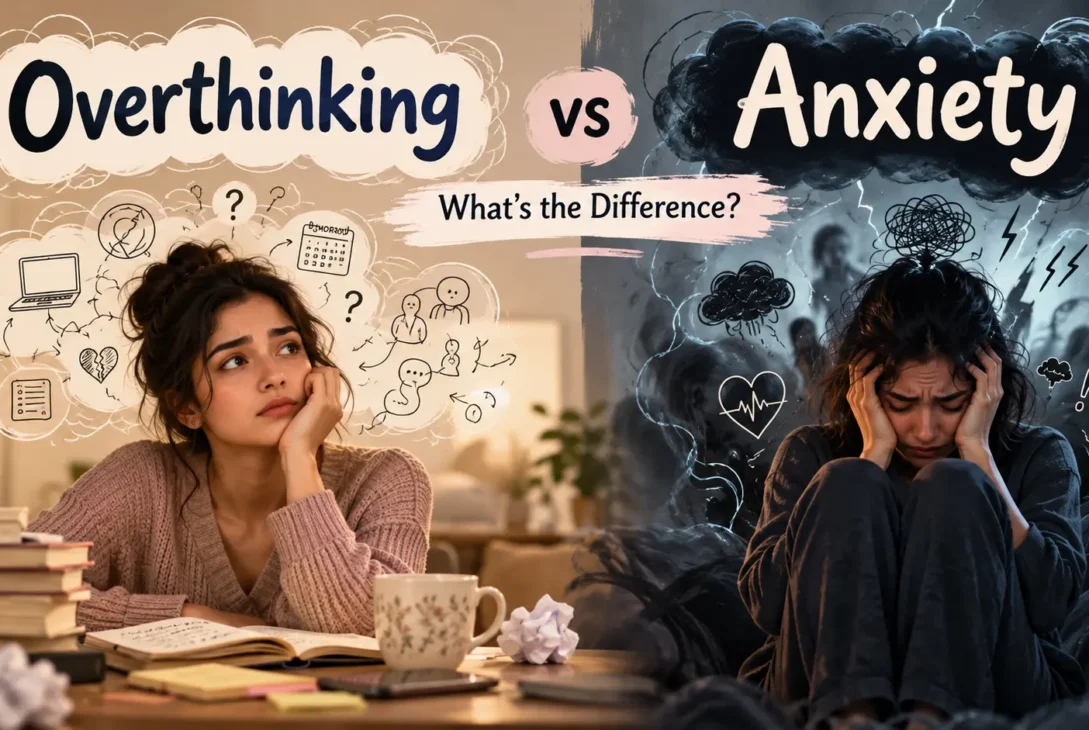
Overthinking vs Anxiety
Our minds are constantly processing experiences, anticipating outcomes, and trying to make sense of the world around us. Sometimes, however, thinking about a situation goes beyond useful reflection and becomes a repetitive cycle of worry, doubt, and imagined possibilities. A simple concern can gradually turn into a series of negative thoughts, leaving us mentally exhausted even when nothing has actually gone wrong. This is where understanding overthinking vs anxiety becomes important. Although the two can feel closely connected, they are not the same, and recognising their differences can help us understand what we are experiencing and how to respond to it.
What Is Overthinking?
Overthinking is a pattern of repetitive thinking in which we keep analysing a situation, revisiting past events, or imagining possible future outcomes without necessarily reaching a useful conclusion. Instead of helping us solve a problem, our thoughts begin to circle around it. We may replay a conversation to understand what someone meant, question a decision we have already made, or imagine everything that could go wrong in a situation that has not even happened yet.
One of the most difficult aspects of overthinking is that the mind can keep generating new possibilities. A single thought leads to another, and each new possibility creates another reason to worry. We might try to distract ourselves by watching something, talking to a friend, or focusing on work, only to find the same thought returning a few minutes later. Over time, this cycle can make even ordinary situations feel overwhelming.
Overthinking often involves negative assumptions, self-doubt, regret, and an excessive need to understand or predict what will happen next. However, not every repeated thought is necessarily harmful. Reflecting on a difficult experience can help us learn from it, and carefully considering a decision can prevent mistakes. The problem begins when thinking stops being constructive and starts affecting our peace, concentration, sleep, or ability to move forward.
What Is Anxiety?
Anxiety is a feeling of fear, apprehension, nervousness, or uneasiness that can arise when we anticipate a threat, face uncertainty, or experience stress. It is a natural human response that can help us prepare for challenges. Feeling nervous before an interview, worrying about an important result, or feeling uneasy before a major life change does not automatically mean that something is wrong.
However, anxiety can become difficult to manage when the feelings are intense, persistent, or disproportionate to the situation. Unlike repetitive thinking alone, anxiety can affect both the mind and the body. A person may experience a racing heartbeat, trembling, sweating, dizziness, muscle tension, difficulty concentrating, disturbed sleep, or a sensation of breathlessness. The experience differs from person to person, and not everyone experiences the same symptoms.
Sometimes, anxiety arrives so intensely that a person struggles to understand what triggered it. In other situations, it develops gradually as worries accumulate over time. An intense episode of sudden fear accompanied by physical symptoms may be a panic attack, although breathlessness or chest discomfort can also have other causes and should not automatically be attributed to anxiety.
It is also important to distinguish everyday anxiety from an anxiety disorder. Occasional anxiety is a normal part of life, whereas an anxiety disorder involves symptoms that can persist, become difficult to control, and interfere with daily functioning. A qualified mental health professional can help determine whether someone’s experiences require further assessment or treatment.
Overthinking vs Anxiety: What Is the Difference?
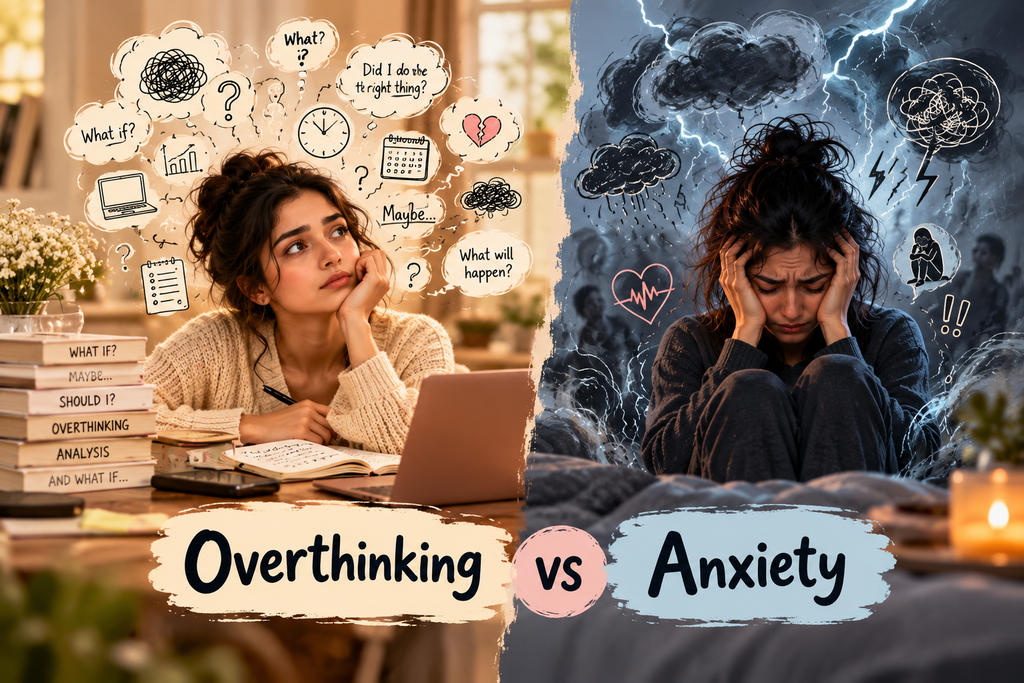
The simplest way to understand the difference is to recognise that overthinking describes a pattern of thinking, while anxiety describes an emotional and physiological response that may include worry, fear, and physical symptoms. They can occur independently, but they often overlap.
Imagine that you have an important interview the following morning. You begin wondering whether you will answer the questions correctly, whether the interviewer will like you, and what will happen if you do not get the job. You replay these possibilities repeatedly, even after preparing as much as you reasonably can. This repetitive mental activity is an example of overthinking.
Now imagine that the same situation leaves you feeling intensely nervous. Your heart begins racing, your body feels tense, your breathing seems uncomfortable, and you find it difficult to settle down. These experiences may reflect anxiety. If the symptoms become sudden and intense, they may warrant assessment for a panic attack or another cause.
| Aspect | Overthinking | Anxiety |
|---|---|---|
| Meaning | Repetitive analysis of thoughts, situations, or possibilities | A feeling of worry, fear, apprehension, or uneasiness |
| Common pattern | Replaying events or imagining negative outcomes | Anticipating danger, feeling tense, or experiencing persistent worry |
| Physical effects | May cause stress, fatigue, or difficulty sleeping | May include a racing heartbeat, sweating, trembling, or breathlessness |
| Sense of control | Thoughts may be difficult to interrupt | Feelings and physical symptoms may be difficult to regulate |
| Relationship | Can contribute to anxious feelings | Can occur with or without overthinking |
| When to seek help | When repetitive thinking significantly affects daily life | When anxiety is persistent, intense, or interferes with daily functioning |
Neither experience looks exactly the same for everyone. Some people overthink without experiencing intense physical anxiety, while others experience anxiety without being able to identify a particular thought or trigger. These descriptions can help with understanding, but they cannot replace a professional assessment.
Can Overthinking Cause Anxiety?
Overthinking can contribute to anxiety, particularly when repetitive thoughts focus on negative outcomes, uncertainty, or situations that feel difficult to control. When we repeatedly imagine something going wrong, our mind may begin responding to that possibility as though the threat were already present. This can increase emotional distress and make it harder to think clearly about what is actually happening.
For example, someone waiting for an important message might begin by wondering why the other person has not replied. That thought may lead to assumptions about rejection, conflict, or an uncertain future. As the possibilities multiply, the person may become increasingly distressed, even though the reason for the delayed response remains unknown. The original uncertainty has not changed, but the repeated interpretations have made it feel morethreatening.
This is one way overthinking and anxiety can reinforce each other. Repetitive negative thinking can intensify anxious feelings, and those feelings can encourage further analysis as the person tries to find certainty or reassurance. The cycle may continue until something interrupts it or the underlying concern is addressed.
However, it would be inaccurate to say that anxiety is always the result of unnecessary overthinking. Anxiety can also be associated with stressful circumstances, traumatic experiences, biological factors, and other influences. Sometimes, anxiety appears first and makes it harder to stop worrying. Understanding this relationship without blaming ourselves is essential to managing both experiences.
Signs You May Be Experiencing Both
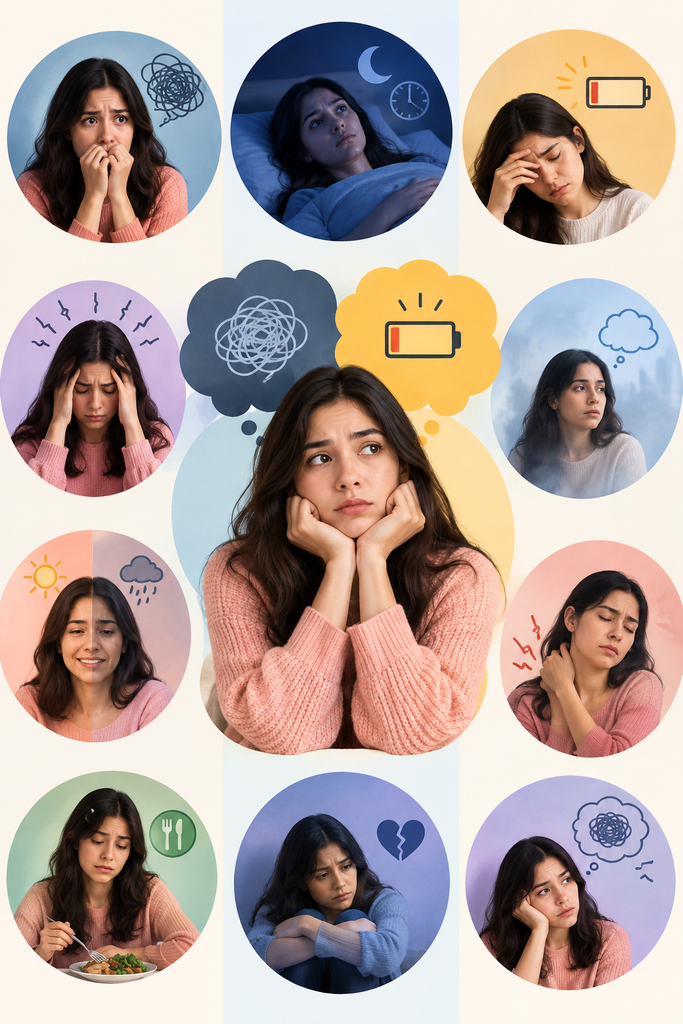
Overthinking and anxiety can be difficult to distinguish when they occur together. You may find yourself repeatedly analysing a situation while also feeling nervous, restless, or physically tense. You might imagine negative outcomes, struggle to concentrate on the present, and find it difficult to relax even when there is no immediate problem to solve.
Another common experience is seeking certainty before taking action. You may repeatedly check your decisions, ask others for reassurance, or mentally rehearse every possible outcome because you fear making a mistake. Although these behaviours may offer brief relief, the uncertainty can return, encouraging the cycle to begin again.
Sleep can also become difficult when thoughts continue long after the day has ended. A conversation from the afternoon may replay in your mind at night, or concerns about tomorrow may prevent you from resting. Over time, poor sleep and persistent worry can leave you feeling less equipped to manage everyday challenges.
These experiences do not automatically indicate an anxiety disorder. Their significance depends on their frequency, intensity, duration, and effect on your life. If you regularly feel trapped in your thoughts or find that worry is interfering with your relationships, work, studies, or well-being, it is worth seeking professional guidance.
How to Manage Overthinking and Anxiety
The first step is to recognise what is happening without judging yourself for it. When a thought repeats itself, pause and ask whether you are discovering something useful or simply revisiting the same fear. If there is a practical action you can take, identify one manageable step. If the situation is outside your control, remind yourself that thinking about it repeatedly cannot guarantee a better outcome.
Grounding yourself in the present can also help. Bring your attention to your surroundings, notice the sensations in your body, or focus on a simple task in front of you. If you feel anxious, try breathing slowly and comfortably rather than forcing deep breaths. These techniques may help you settle, although they are not guaranteed to eliminate anxiety immediately.
Talking to someone you trust can make a difference, especially when you feel overwhelmed by your own thoughts. Sharing a concern may help you see it from another perspective, identify a practical solution, or simply feel less alone. Supportive relationships do not remove every difficulty, but they can provide emotional safety during uncertain periods.
It can also be helpful to write down recurring worries. Separating what you know from what you fear may reveal how much of your distress comes from assumptions about the future. You can then consider which concerns require action and which ones may need to remain unresolved for now. Maintaining regular sleep, physical activity, balanced routines, and time for enjoyable activities can support emotional well-being as well.
Most importantly, do not treat professional help as a last resort or a sign of weakness. If anxiety is persistent, difficult to control, or affecting your everyday life, a psychologist, psychiatrist, or another qualified healthcare professional can help you understand your symptoms and explore appropriate treatment. Psychological therapies, including cognitive behavioural therapy, are evidence-based options for many anxiety-related difficulties.
The Importance of Support, Perspective, and Hope

Every person’s experience of overthinking and anxiety is shaped by their circumstances. Some people have families who listen patiently and provide reassurance when life becomes difficult. Others may be dealing with unresolved trauma, strained relationships, financial pressure, or an environment in which they do not feel safe expressing their emotions. Understanding these differences reminds us why compassion matters more than comparison.
Having someone who listens without dismissing our feelings can make it easier to process difficult experiences. When that support is unavailable, a trusted friend, support group, counsellor, or mental health professional may provide a valuable alternative. No one should feel that their struggles are less deserving of care simply because someone else appears to handle life differently.
A broader perspective on life can also help us respond to difficulties with greater patience. Many situations that once felt impossible eventually change, even if they do not resolve in the way we originally expected. Reminding ourselves that a difficult phase will not necessarily define our entire future can create space for hope. It does not mean pretending that the problem is insignificant or assuming everything will automatically work out. It means allowing ourselves to believe that the present moment is not the whole story.
Our choices matter, too. Sometimes, anger, pride, fear, or greed can influence decisions and make an already difficult situation more complicated. Consider someone who invests in the stock market, sees a profit, and continues taking risks because they want even greater returns. If the market turns against them, their decision may result in a loss. Reflecting on that experience can help them recognise the role of their own choices.
Yet not every painful outcome is the result of a mistake. Some circumstances are genuinely unpredictable, and some difficulties arise despite our best efforts. We cannot control every event, but we can learn to distinguish between what is within our influence and what is not. That distinction can reduce the exhausting pressure to find an answer to every uncertainty.
For some people, faith provides this sense of perspective. Prayer, meditation, or trust in a higher power may offer comfort and help them feel less alone. Others find similar strength through their values, relationships, connection with nature, or belief in their ability to keep moving forward. There is no single source of hope that works for everyone, and spirituality should never be used to shame someone who is struggling.
When Should You Seek Professional Help?
Occasional overthinking and anxiety are common human experiences, but persistent distress deserves attention. Consider speaking with a qualified mental health professional if your worries feel uncontrollable, if physical symptoms recur, if you regularly struggle to sleep, or if anxiety begins affecting your work, relationships, studies, or daily activities.
You do not need to wait until you reach a breaking point to ask for help. Professional support can help you recognise patterns, understand possible triggers, develop coping strategies, and determine whether further treatment may be useful. If symptoms such as breathlessness or chest pain are new, severe, or unusual, seek appropriate medical assessment rather than assuming they are caused by anxiety.
Seeking help is not an admission that you have failed to manage your thoughts. It is a way of taking your well-being seriously. Just as we seek support when a physical problem becomes difficult to handle alone, emotional struggles also deserve care, patience, and appropriate attention.
Frequently Asked Questions About Overthinking vs Anxiety
Is overthinking the same as anxiety?
No. Overthinking is a pattern of repeatedly analysing thoughts or possibilities, while anxiety involves feelings of worry, fear, or apprehension that may also produce physical symptoms. They can occur together, but neither automatically means the other is present.
Can overthinking turn into an anxiety disorder?
Persistent negative thinking can contribute to distress and may intensify anxiety, but overthinking does not inevitably lead to an anxiety disorder. Anxiety disorders can develop through a combination of factors, and only a qualified professional can assess whether someone’s symptoms meet the criteria for a particular condition.
How do I know whether I am overthinking or experiencing anxiety?
Notice both your thought patterns and your emotional and physical responses. Repeatedly replaying a conversation or imagining negative outcomes may suggest overthinking. Persistent fear, restlessness, tension, or physical symptoms may indicate anxiety. Because the experiences overlap, this distinction alone cannot establish a diagnosis.
Can anxiety happen without overthinking?
Yes. Anxiety can occur without an obvious repetitive thought or identifiable trigger. It may arise in response to stress, uncertainty, past experiences, or other factors. Some people notice physical sensations or a general sense of uneasiness before they understand what they are feeling anxious about.
What is the first thing I should do when I cannot stop overthinking?
Pause and acknowledge the thought without criticising yourself. Ask whether there is a practical action you can take now. If there is, focus on one manageable step; if there is not, gently redirect your attention to the present. If the pattern continues to affect your well-being, consider seeking professional support.
Final Thoughts: Your Current Struggle Does Not Define Your Entire Life
Life does not give everyone the same starting point, the same support system, or the same challenges. Some people find comfort in their families, some in their faith, and others through the relationships and resources they build along the way. What matters is recognising that every person deserves to be treated with humanity, patience, and respect, regardless of what they are going through.
Overthinking may convince us that we must solve every uncertainty before we can feel peaceful. Anxiety may make an uncertain moment feel frightening or impossible to manage. Yet neither experience means that we are weak, and neither should become a reason to judge ourselves harshly. We can acknowledge our feelings without allowing them to become the only story we tell ourselves about our lives.
One perspective worth carrying forward is that difficult phases can change. We may not know when a situation will improve or how its outcome will unfold, but we can choose to care for ourselves while we move through it. Sometimes that means taking a practical step. Sometimes it means asking someone for help, speaking to a professional, or giving ourselves permission to rest.
For those who find strength in faith, a simple prayer can become a reminder to surrender what cannot be controlled while continuing to do what can be done. For those who do not follow a spiritual path, trust in their own resilience, their loved ones, or the possibility of a different tomorrow can offer a similar source of hope.
The goal is not to eliminate every difficult thought or promise ourselves that nothing painful will ever happen. It is to learn that a thought is not always a fact, uncertainty is not always danger, and a difficult moment does not determine the value of an entire life.
Your situation may need attention, your feelings may deserve support, and your next step may require courage. But you do not have to solve your entire life today. Start with the moment you are in, treat yourself with compassion, and remember that asking for help is also a way of moving forward.