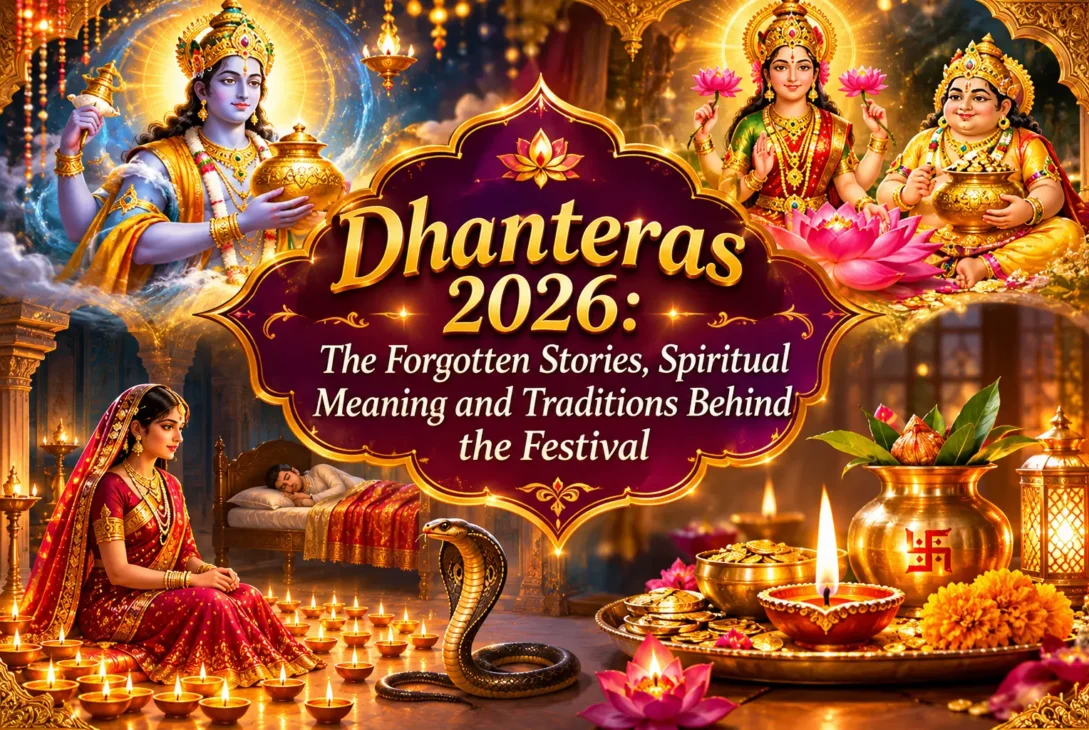
Dhanteras 2026
Dhanteras is often associated with gold, silver, new utensils and the excitement of preparing for Diwali. As homes are cleaned, diyas are arranged and families begin their festive preparations, the occasion brings a sense of anticipation and new beginnings. However, behind these familiar customs lies a deeper collection of stories and beliefs that connect Dhanteras with health, prosperity, devotion and the preciousness of life.
Also known as Dhantrayodashi, Dhanteras marks the beginning of the five-day Diwali festivities in many Hindu traditions. It is observed on the thirteenth lunar day (Trayodashi) of Krishna Paksha in the month of Kartik, according to the North Indian calendar.
The festival is particularly associated with Bhagwan Dhanvantari, whose appearance is described in the story of Samudra Manthan. It is also connected with the worship of Goddess Lakshmi and Lord Kuber, as well as the tradition of lighting a lamp for Lord Yama.
While buying precious metals remains a popular custom, the deeper significance of Dhanteras goes beyond material possessions. Its stories remind us that wealth, health, longevity and well-being are all valuable parts of a fulfilling life.
Let’s explore the forgotten stories, spiritual significance and traditions that make Dhanteras meaningful.
When Is Dhanteras 2026?
Dhanteras will be celebrated on Friday, 6 November 2026.
The festival falls on Kartik Krishna Trayodashi, the thirteenth day of the waning lunar fortnight. Families observe the occasion through traditional worship, prayers, lighting of lamps and preparations for the upcoming Diwali celebrations.
The evening is particularly significant for Dhanteras Puja and Yama Deepdaan. Since auspicious timings depend on the location and local Panchang calculations, devotees should check the timings applicable to their city before performing the rituals.
The Story of Samudra Manthan and the Appearance of Bhagwan Dhanvantari
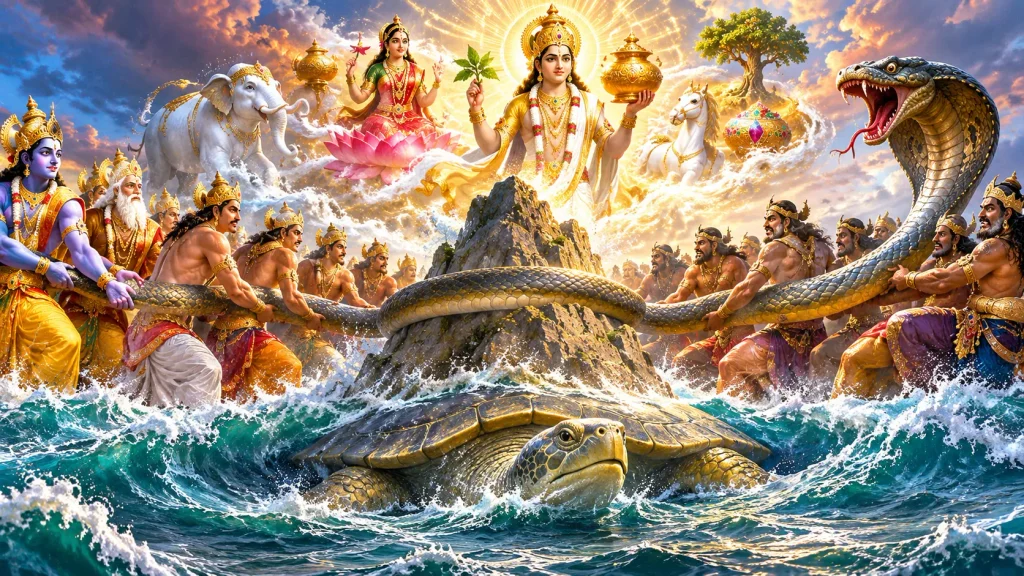
One of the most significant mythological stories associated with Dhanteras comes from Samudra Manthan, the great churning of the cosmic ocean.
The story is described in Hindu Puranic literature, including the Shrimad Bhagavata Purana.
According to the narrative, the Devas had lost their strength and were struggling to maintain their position against the Asuras. Seeking a way to regain their strength, they approached Lord Vishnu for guidance.
Lord Vishnu advised them to work together with the Asuras to churn the Ksheer Sagar, or Ocean of Milk, to obtain Amrit, the divine nectar associated with immortality.
Although the Devas and Asuras were rivals, they temporarily joined forces for this extraordinary undertaking.
Mount Mandara was used as the churning rod, while Vasuki, the serpent king, served as the rope. Lord Vishnu supported the mountain in his Kurma, or tortoise, incarnation to prevent it from sinking into the ocean.
As the churning continued, several extraordinary treasures and divine beings emerged from the ocean.
Among these was Goddess Lakshmi, whose appearance brought an association with prosperity, beauty and auspiciousness. She eventually chose Lord Vishnu as her consort.
Later, Bhagwan Dhanvantari emerged carrying a vessel filled with Amrit.
His appearance holds particular importance in the story because he represents divine knowledge of medicine and healing.
Who Is Bhagwan Dhanvantari?
Bhagwan Dhanvantari is revered in Hindu tradition as the divine physician and associated with Ayurveda, the traditional Indian system of medicine.
The Shrimad Bhagavata Purana, in Canto 8, Chapter 8, Verse 34, identifies Dhanvantari as an incarnation of Lord Vishnu and describes him as deeply knowledgeable in medical science.
His appearance carrying the Amrit Kalash has become an important part of the religious significance of Dhanteras.
The association of Dhanteras with Bhagwan Dhanvantari reminds devotees that good health is an essential blessing. While financial prosperity helps provide comfort and security, health allows individuals to experience and enjoy life.
This is why Dhanteras is also associated with prayers for good health, well-being and longevity.
An important distinction is that the Bhagavata Purana describes Dhanvantari’s emergence during Samudra Manthan but does not specify that the event occurred on Kartik Krishna Trayodashi. His association with Dhanteras is preserved through the festival tradition.
The Forgotten Story of King Hima and Yamadeepdaan
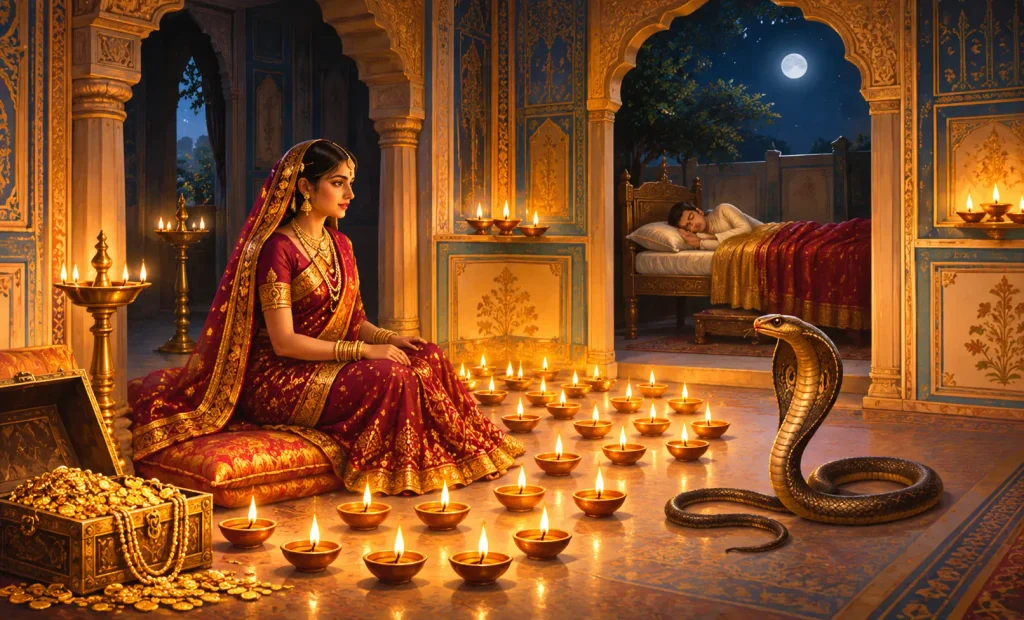
Among the lesser-discussed traditions of Dhanteras is Yamadeepdaan, the practice of lighting a lamp in honour of Lord Yama, the deity associated with death.
This tradition is connected with the popular story of King Hima and his son.
According to a widely circulated Dhanteras folk tale, King Hima’s son was destined to die from a snakebite on the fourth day after his marriage.
When his newly married wife learned about the prediction, she decided not to let fear take control of the situation.
On the night when the predicted danger was supposed to occur, she kept her husband awake. She placed gold and silver ornaments near the entrance of their chamber, arranged numerous lamps around the surroundings and spent the night singing songs and telling stories.
When Lord Yama arrived in the form of a serpent, the bright lamps and glittering ornaments caught his attention. Unable to approach the chamber, he remained outside, listening to the bride’s songs and stories.
As the night passed, the predicted moment went by, and the prince remained alive.
The story is remembered as an example of devotion, determination and the power of light in the face of darkness.
Why Is a Diya Lit for Lord Yama on Dhanteras?
Yamadeepdaan is traditionally performed to seek protection from untimely death and pray for the long life and well-being of family members.
The Skanda Purana’s Kartik Masa Mahatmya describes the observance of a lamp offering to Lord Yama on Trayodashi. The Narada Purana also contains a reference to the practice of keeping an oil lamp outside the home.
However, the complete story of King Hima’s son, including the bride, the serpent and the lamps, is commonly preserved through popular religious storytelling. It should not be confused with the shorter scriptural reference to the Yama lamp.
The tradition carries a meaningful reminder: life is precious, and every moment spent with loved ones deserves gratitude.
The Connection Between Dhanteras, Goddess Lakshmi and Lord Kuber
Dhanteras is closely associated with prosperity, and two important divine figures connected with this aspect of Hindu tradition are Goddess Lakshmi and Lord Kuber.
Although they represent different aspects of wealth, their worship together reflects the importance attached to prosperity and the preservation of resources.
Goddess Lakshmi: The Symbol of Prosperity and Abundance
Goddess Lakshmi is worshipped as the deity of wealth, prosperity, abundance and good fortune.
Her appearance during Samudra Manthan is an important part of the Puranic narrative. She is traditionally associated with material prosperity as well as auspiciousness, beauty and well-being.
Devotees worship Goddess Lakshmi with the hope of welcoming abundance, happiness and harmony into their homes.
Her presence in Dhanteras celebrations also connects the festival with the wider Diwali tradition of welcoming prosperity and light.
Lord Kuber: The Guardian of Wealth
Lord Kuber, also known as Kubera, is traditionally regarded as the Lord of Wealth and the treasurer of the Devas.
In Hindu mythology, he is associated with the guardianship of treasures and material riches. He is also recognised as the king of the Yakshas.
While Goddess Lakshmi represents prosperity and abundance, Lord Kuber is associated with the guardianship and preservation of wealth.
Why Are Goddess Lakshmi and Lord Kuber Worshipped Together?
Their combined worship during Dhanteras reflects two complementary aspects of prosperity.
Goddess Lakshmi is worshipped for abundance and good fortune, while Lord Kuber is honoured in connection with the protection and guardianship of wealth.
This tradition can also be understood through a broader spiritual perspective: acquiring wealth is important, but managing it responsibly and using it wisely are equally valuable.
Dhanteras therefore offers an opportunity to reflect on what prosperity truly means. It is not simply about possessing more; it is also about using resources thoughtfully and creating stability for ourselves and our families.
The exact forms of worship may differ between regions and households, but the association of Lakshmi and Kuber with Dhanteras remains an important part of many Hindu traditions.
The Spiritual and Cultural Significance of Dhantrayodashi
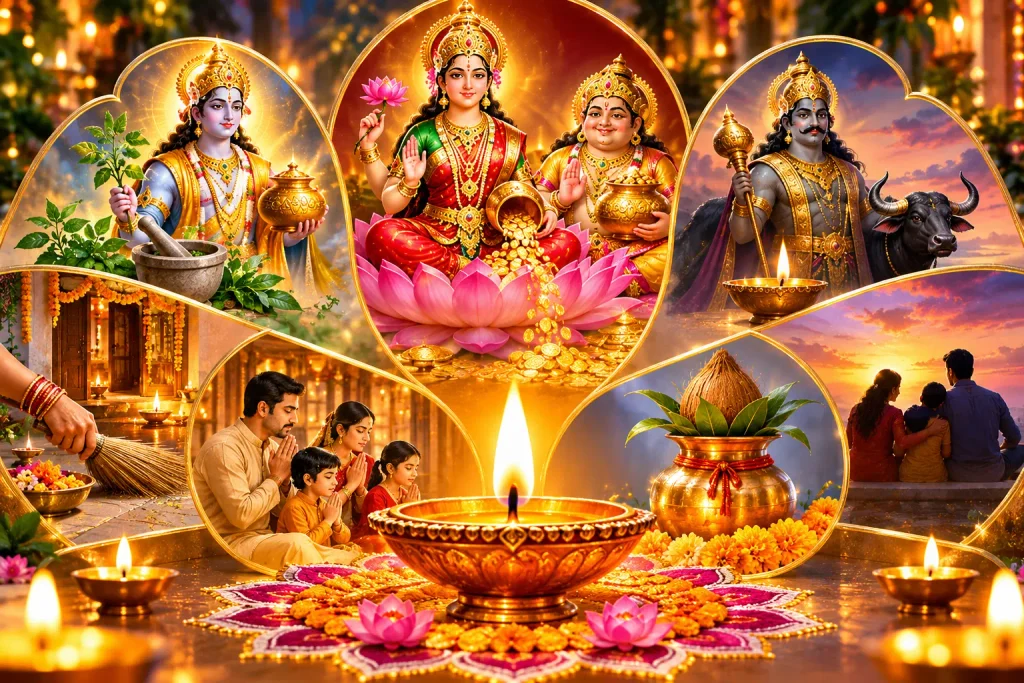
The word Dhanteras is commonly understood through two words: Dhan, meaning wealth, and Teras, referring to the thirteenth lunar day.
However, the festival’s significance extends beyond the idea of financial wealth.
Its different traditions bring together several aspects of life that are deeply valued in Hindu culture.
1. Wealth and Financial Stability
The worship of Goddess Lakshmi and Lord Kuber reflects the importance of prosperity and financial well-being.
Financial stability provides security, helps families meet their needs and allows individuals to plan for the future.
2. Health and Well-being
The association with Bhagwan Dhanvantari gives Dhanteras a meaningful connection with health and Ayurveda.
His story reminds devotees that good health is one of life’s most valuable blessings.
3. Longevity and Protection
The tradition of Yamadeepdaan reflects prayers for long life and protection from untimely death.
It also reminds families to value the time they share with one another.
4. Gratitude and New Beginnings
Cleaning homes, lighting diyas and performing puja are not simply festive activities. They also represent preparation, gratitude and the welcoming of positive beginnings.
Together, these traditions make Dhanteras a festival that brings wealth, health, devotion and hope into one celebration.
Dhanteras Puja Vidhi: Traditional Rituals and Their Meanings
Dhanteras Puja is generally performed during the evening, particularly during the auspicious Pradosh period, according to the local Panchang.
Although the exact procedure may vary between families and regions, the following practices are commonly observed.
1. Clean and Prepare the Home
Families clean and decorate their homes before the festival. Rangoli, flowers and traditional decorations are used to create a welcoming atmosphere.
This preparation symbolises the desire to welcome auspiciousness and prosperity.
2. Prepare the Puja Area
Arrange the pictures or idols of the deities being worshipped. Keep flowers, roli, rice, fruits, sweets, incense and a diya ready.
3. Worship Bhagwan Dhanvantari
Offer prayers to Bhagwan Dhanvantari and seek blessings for good health, healing and the well-being of family members.
4. Perform Lakshmi and Kuber Puja
Offer flowers, sweets and prayers to Goddess Lakshmi and Lord Kuber according to your family’s traditions.
Devotees pray for financial stability, prosperity and the wisdom to use wealth responsibly.
5. Light the Yama Deepa
A traditional earthen lamp is lit in honour of Lord Yama during the evening. In many households, it is placed outside the home, often facing south, according to family customs.
The lamp represents prayers for longevity and protection.
6. Offer Prayers and Express Gratitude
Conclude the worship with prayers, aarti and gratitude for the blessings already present in life.
These practices are traditional guidelines rather than a single compulsory procedure. Families should follow their regional customs and preferred Panchang guidance.
What Does True Wealth Mean? A Personal Reflection
For me, Dhanteras has always been connected with the excitement of Diwali. As a child, I saw it as the beginning of the festive celebrations: cleaning the house, performing puja, lighting diyas and preparing to welcome Diwali. It felt like a beautiful rehearsal before the main festival arrived.
But as I grew older, my understanding of Dhanteras began to change.
Last year, my father met with a serious accident and suffered a fracture in his left shoulder. Thankfully, he recovered, but the experience changed the way our family celebrated festivals. The excitement and happiness we usually associated with these occasions were overshadowed by concern for his health and recovery. We could not celebrate the festival in the way we had always done before.
That experience made me realise something I had not fully understood as a child: money and material comforts are important, but good health is equally precious.
It also made me understand that wealth and health cannot simply be placed against each other. Both have an important role in our lives.
When someone in the family faces a medical emergency, financial resources become essential. Money helps us consult doctors, purchase medicines, afford treatment and access better healthcare facilities. Financial stability can provide support when families need it most.
At the same time, having money does not guarantee good health. Health allows us to enjoy our achievements, spend meaningful time with our loved ones and experience the comforts that financial stability can provide.
Today, when I think about Dhanteras, I don’t think only about buying gold, silver or new household items. I think about every family being blessed with financial stability, good health and the opportunity to celebrate life’s beautiful moments together.
For me, the true meaning of Dhanteras is simple: may every home have both wealth and health, because both are essential to living a fulfilling life. One helps us build a comfortable life, while the other allows us to experience and enjoy it.
Final Thoughts: Celebrating Dhanteras Beyond Material Wealth
Dhanteras brings together stories of divine origins, traditional worship and cultural practices that have been passed down through generations.
The story of Bhagwan Dhanvantari reminds us of the importance of health. The tradition of Yamadeepdaan encourages prayers for longevity, while the worship of Goddess Lakshmi and Lord Kuber reflects the value of prosperity and financial well-being.
These traditions offer a broader understanding of wealth, one that goes beyond the things we can purchase or possess.
As we light diyas and prepare our homes for Diwali, perhaps the most meaningful way to celebrate Dhanteras is to appreciate the blessings that make life worth living.
May every home be blessed with financial stability, good health, happiness and peace. May we have the resources to overcome difficult times and the health to enjoy life’s beautiful moments with the people we love.
Shubh Dhanteras 2026!
Frequently Asked Questions About Dhanteras 2026
1. When is Dhanteras in 2026?
Dhanteras will be celebrated on Friday, 6 November 2026. It falls on the Trayodashi Tithi of Krishna Paksha in the Hindu month of Kartik and marks the beginning of Diwali festivities.
2. Why is Dhanteras celebrated?
Dhanteras is celebrated to honour wealth, prosperity and good health. It is associated with the appearance of Bhagwan Dhanvantari during Samudra Manthan and is also dedicated to prayers for Maa Lakshmi, Lord Kuber and Yama.
3. Who is Bhagwan Dhanvantari, and why is he worshipped on Dhanteras?
Bhagwan Dhanvantari is regarded as the divine physician and an incarnation of Lord Vishnu. According to the Bhagavata Purana, he emerged during Samudra Manthan carrying a pot of Amrit, the divine nectar. He is worshipped on Dhanteras as a symbol of health, healing and Ayurveda.
4. Why do people light a diya for Yamraj on Dhanteras?
Lighting a diya for Yamraj is known as Yamadeepdaan. According to a popular traditional story, a lamp was lit to protect a young prince from untimely death. The practice is associated with prayers for longevity and protection from premature death.
5. Why are Maa Lakshmi and Lord Kuber worshipped together on Dhanteras?
Maa Lakshmi represents wealth, prosperity and abundance, while Lord Kuber is traditionally regarded as the treasurer of the Devas. Worshipping them together symbolises the wish for prosperity, financial stability and the responsible preservation of wealth.
6. What is the spiritual significance of Dhanteras?
Dhanteras reminds us that true prosperity is not limited to money or material possessions. It also includes good health, peace, security and the ability to lead a fulfilling life. The worship of Bhagwan Dhanvantari especially highlights the importance of health alongside wealth.
7. What should we buy on Dhanteras?
Traditionally, people buy gold, silver, utensils, jewellery and other household items on Dhanteras. However, purchasing expensive items is not compulsory. Many families choose affordable items according to their traditions and financial circumstances.
8. Can we celebrate Dhanteras without buying gold or silver?
Yes. Buying gold or silver is a popular custom, not a requirement for celebrating Dhanteras. You can observe the festival through prayer, lighting diyas, cleaning your home and expressing gratitude for the wealth and health you already have.
9. What is the difference between Dhanteras and Dhantrayodashi?
There is no difference between the two. Dhanteras is the commonly used name for Dhantrayodashi, the thirteenth lunar day of Krishna Paksha in the month of Kartik.
10. What is the message of Dhanteras beyond wealth and material prosperity?
The deeper message of Dhanteras is to value both wealth and health. Financial resources help us access good healthcare and meet our needs, while good health allows us to enjoy our family, achievements and everyday experiences. Both contribute to a meaningful life.