

Sometimes Losing Your Peace Happens So Quietly That You Don’t Even Notice
Losing your peace is like handing someone else the remote control of your life.
The moment another person’s words decide your mood, someone else’s opinion controls your confidence, or someone else’s behaviour steals your happiness, you’ve unknowingly given them the power to control your day. and you somehow don’t know How to protect your peace?
The truth is, most of us don’t wake up one morning and decide to lose our peace. It happens quietly, one experience at a time. One comment. One disappointment. One rejection. Before we realise it, we’re spending more time worrying about what others think than listening to what our own heart is trying to tell us.
I know this because I have lived it.
When I was a child, I didn’t know what protecting my peace meant. In fact, I didn’t even know that peace was something that could be lost.
I still remember the day everything changed.
I wanted to participate in a dance performance at school. Like every child, I was excited. I wasn’t thinking about my height, my appearance or whether I looked different. I was simply happy to dance.
But before I even got the chance, a teacher looked at me and said,
“Your height isn’t enough. You can’t participate in the dance.”
Maybe those words were just another sentence for the teacher.
For me, they became a belief.
From that day onward, I started looking at myself through someone else’s eyes. I convinced myself that my height was the biggest problem in my life. I stopped enjoying many beautiful moments because my mind was busy trying to fix something I couldn’t change.
Looking back today, I don’t feel sad because I wasn’t tall enough.
I feel sad because I spent years believing that I wasn’t enough.
Without realising it, I had given the remote control of my happiness to other people’s opinions.
That was the day I slowly started losing my peace.

My Peace Didn’t Return Because My Height Changed
For a long time, I believed that one day, when my height increased, I would finally become happy and confident.
That day never came.
What came instead was something much more valuable.
Acceptance.
I slowly began accepting myself—not just my strengths, but also my flaws, my insecurities and every part of me that I had spent years trying to hide.
And something beautiful happened.
The more I accepted myself, the quieter my mind became.
For the first time in years, I wasn’t fighting myself anymore.
That was the beginning of finding my peace again.
My life didn’t suddenly become perfect. I still had problems. I still faced difficult people, stressful jobs and days when nothing seemed to go my way.
The difference was that I had stopped making myself my biggest enemy.

My Peace Didn’t Return Because I Changed.
It Returned Because I Accepted Myself.
Peace Isn’t Found Once. It’s Practised Every Day.
One thing life has taught me is that peace isn’t something you achieve once and keep forever.
It’s something you choose every single day.
Even today, there are situations that test my patience. There are conversations that can irritate me, unexpected problems that can overwhelm me and moments when overthinking tries to take over.
The difference is that today I notice it much earlier.
Instead of reacting immediately, I ask myself one simple question:
“Is this situation really worth my peace?”
Sometimes the answer is yes.
Some situations deserve our attention.
Some conversations need honesty.
Some relationships are worth fighting for.
But many things simply don’t deserve access to our energy.
Not every opinion deserves an explanation.
Not every criticism deserves a response.
Not every argument deserves our participation.
One of the biggest lessons I’ve learned is that protecting your peace isn’t about avoiding life.
It’s about choosing where your energy deserves to go.
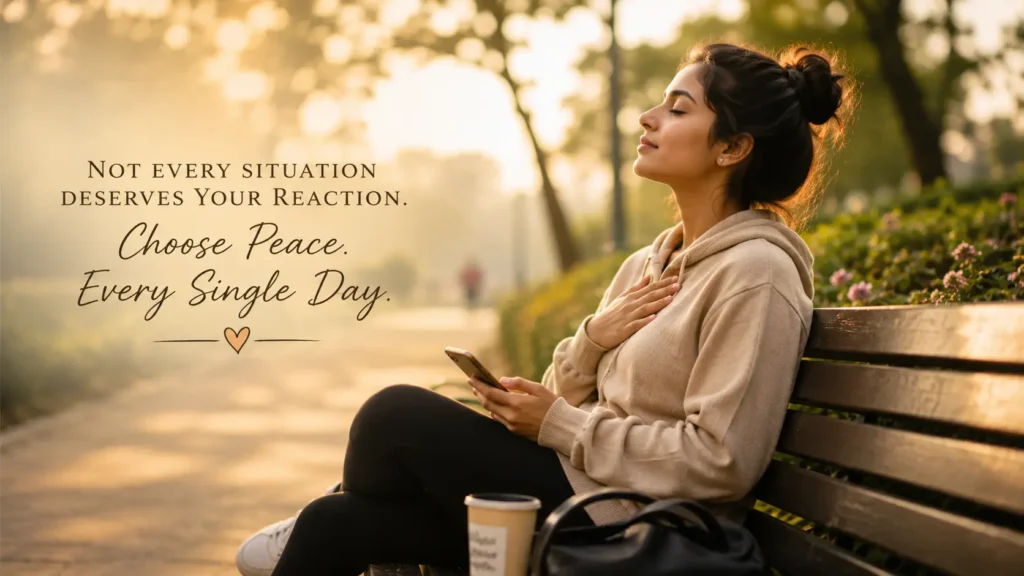
Peace Doesn’t Mean Becoming Emotionless
For a long time, I thought peaceful people never got angry, never cried and never reacted to difficult situations.
Now I know that’s not true.
I’ve met yoga teachers, motivational speakers and people who inspire thousands of others every day. I’ve also seen them experience difficult moments.
That taught me something important.
Peace doesn’t mean becoming a perfect human being.
It means learning how to return to yourself after life pulls you away.
Some days you’ll react.
Some days you’ll overthink.
Some days you’ll lose your patience.
You’re human.
The goal isn’t to become someone who never loses peace.
The goal is to become someone who knows how to find it again.
Just like we eat every day to nourish our body, we have to nourish our mind every day too.
Peace isn’t a one-time achievement.
It’s a lifelong practice.

Peace Isn’t Perfection.
It’s Returning to Yourself.
Why I Protect My Peace Differently Today
Today, protecting my peace looks very different from what it did years ago.
Sometimes it looks like rolling out my yoga mat and simply focusing on my breath.
Sometimes it means putting on old songs while I work because they make my heart feel lighter.
Sometimes it’s watering my plants and quietly admiring their flowers.
Sometimes it’s choosing dance over overthinking.
Sometimes it’s politely creating distance from people whose conversations leave me emotionally exhausted.
And sometimes, protecting my peace simply means accepting that I cannot control everything.
Whenever life becomes too heavy, I ask myself two questions.
Can I do something to improve this situation?
If the answer is yes, I give it my best effort.
If the answer is no, I remind myself that worrying won’t change the outcome.
There are situations where overthinking cannot solve anything.
In those moments, I choose faith over fear.
For me, that faith comes through GauriShankar. For someone else, it may come through God, prayer, nature, family, or simply trusting that difficult seasons eventually pass.
Whatever your source of strength is, don’t be afraid to lean on it.
You don’t have to carry every burden alone.
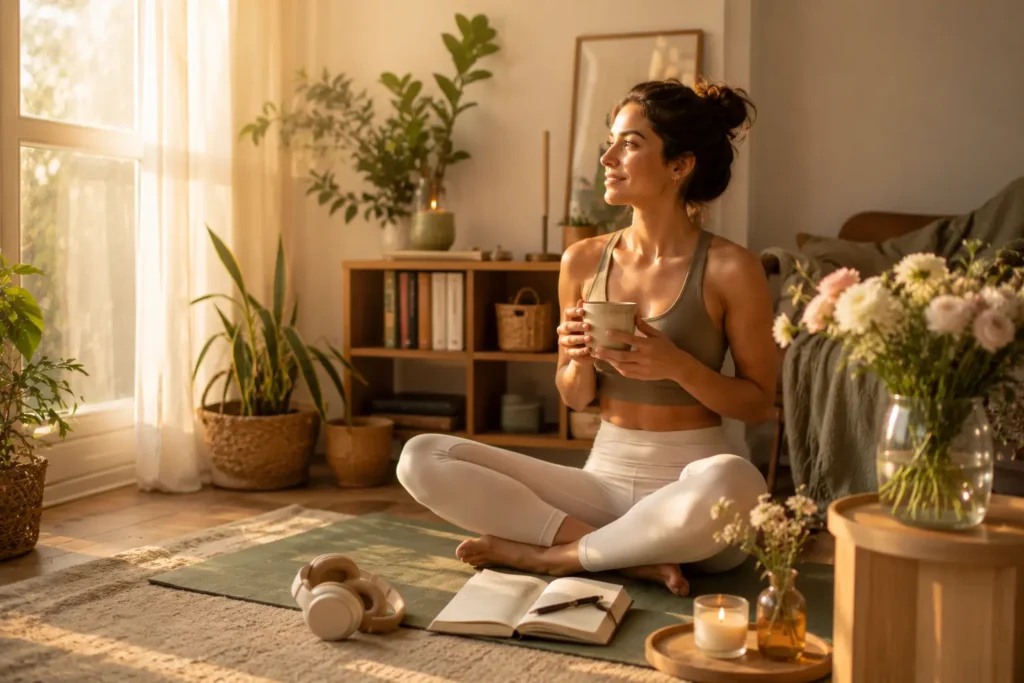
Do What Brings You Back To Yourself
Before We Continue…
If you’re reading this today because your mind feels tired, your heart feels heavy, or you’ve forgotten what peace even feels like, I want you to know something.
Peace isn’t reserved for people with perfect lives.
It belongs to ordinary people who keep choosing themselves, one day at a time.
There will be days when you lose it again.
That’s okay.
Protecting your peace isn’t about getting it right every single day.
It’s about refusing to give up on yourself.
Treat peace the way you treat breathing.
You don’t breathe once and expect it to last forever.
You breathe every single day because that’s what keeps you alive.
Your inner peace works the same way.
It needs your attention.
It needs your care.
It needs your daily effort.
And I promise you this—not because I’ve read it in a book, but because I’ve lived it.
If you keep showing up for yourself, one small choice at a time, you’ll slowly begin to notice something beautiful.
The noise around you may not disappear.
Life won’t suddenly become perfect.
But your heart will become stronger.
And one day, you’ll realise that the peace you were searching for wasn’t waiting somewhere outside.
It was patiently waiting for you to come back to yourself.

The Peace You Seek
Has Been Within You All Along
Tip 1: Pause Before You React—Understand What’s Stealing Your Peace
A few years ago, whenever something went wrong, my first instinct was to react.
I’d replay the situation in my mind, expect people to understand me, hope circumstances would magically improve, and somehow believe that once everything outside of me was fixed, I’d finally feel peaceful.
But life kept teaching me the same lesson over and over again.
One day, I asked myself a simple question:
“What is actually disturbing my peace right now?”
That question changed everything.
Now, whenever I feel anxious, hurt, angry, or emotionally drained, I pause before reacting.
I ask myself:
- What exactly am I feeling?
- Why is this affecting me so much?
- Can I actually do something about it?
If the answer is yes, I stop worrying and start taking action.
If the answer is no, I stop fighting reality. Instead of carrying that emotional weight all day, I allow myself to release it in healthy ways. Sometimes I journal. Sometimes I cry. Sometimes I vent, pray, go for a walk, or simply sit quietly until my mind begins to settle.
Then I remind myself of something I now call Life’s Algorithm.
If you can change it, work on it.
If you can’t change it, don’t let it control your peace.
It’s surprisingly simple, but it’s one of the hardest lessons to live by.
Most of us wait for people to become kinder, families to become healthier, workplaces to become less stressful, or life to become fair before allowing ourselves to feel okay.
But that’s not how life works.
The moment you make your peace dependent on someone else’s behavior or on perfect circumstances, you’ve given away the power to your own happiness.
That’s when I realized something I wish I had understood much earlier:
Peace isn’t found when people change. Peace is found when you understand the algorithm of life.
Not everything is yours to fix.
Not every battle deserves your energy.
And not every situation deserves a permanent place in your mind.

Protecting your peace begins with awareness. Pause, reflect, and choose your response instead of reacting to every situation
The more I accepted that, the lighter I became.
LUS Reflection
Life’s Algorithm is simple:
Can you control it?
Yes → Take action.
No → Let it go. Protect your peace.
The world may never become peaceful, but your mind still can.
Tip 2: Stop Trying to Control Everything—You Can’t Protect Your Peace by Controlling Other People
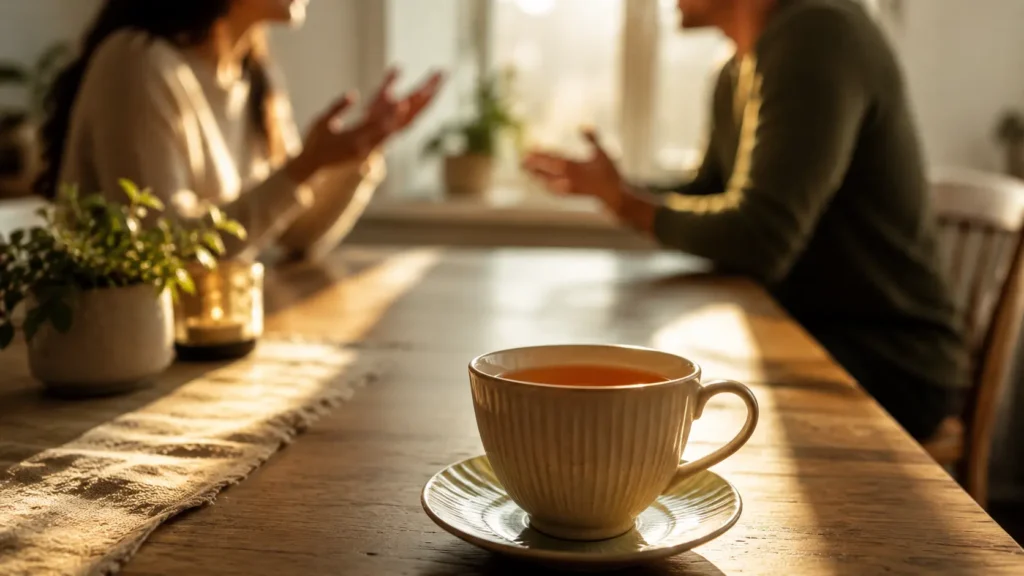
Sometimes, it’s never about the tea. It’s about the need to control—and the peace we lose because of it.
Let me tell you a simple story.
Imagine a daughter-in-law making tea in her new home.
In her parents’ house, she learned to boil water first, then add tea leaves, sugar, ginger, cardamom, and finally milk.
But in her mother-in-law’s house, tea has always been made differently. First, milk and water are boiled together, and only then are the tea leaves and sugar added.
Now ask yourself…
Does the process matter more than the result?
If the tea tastes good, does it really matter which method was used?
Yet, this tiny difference becomes an argument in so many homes.
Not because of tea.
Because of control.
One person wants things done their way. The other wants the freedom to do it their way. And somewhere in between, peace quietly disappears.
This isn’t just about mothers-in-law and daughters-in-law. It happens between parents and children, partners, siblings, friends, and even colleagues at work. We often convince ourselves that if people would simply do things our way, life would become easier and relationships would improve.
But that’s rarely how life works.
One of the biggest lessons I’ve learned is that the more we try to control other people, the more we end up hurting ourselves. We cannot force someone to think the way we think, behave the way we expect, or make the choices we believe are right. Every person has their own experiences, beliefs, and way of seeing the world.
Instead of trying to control people, learn to understand them. Share your advice when someone is genuinely open to hearing it. But if they choose a different path, allow them the freedom to make their own decisions. Sometimes people learn their greatest lessons not by listening to advice, but by living through their own experiences.
The moment we stop trying to control every outcome and every person, we create space for something much more valuable—peace.
Think about how many arguments begin with the words, “Why don’t they understand me?” or “Why can’t they just do it my way?” Those thoughts may seem harmless, but over time they quietly drain your emotional energy.
Every unnecessary attempt to control someone else’s choices costs you far more than you realize. It steals your mental peace, consumes your emotional energy, and fills your mind with frustration over things that were never truly yours to control. While you’re busy trying to change someone else, you’re slowly losing the calm you’ve worked so hard to build within yourself.
Protecting your peace doesn’t mean you stop caring about people. It simply means you stop carrying the impossible responsibility of controlling them.
LUS Reflection
It was never about the tea. It was always about control.
The day you stop trying to control everyone around you is the day you finally give yourself permission to live in peace.
Tip 3: Learn to Say No Without Guilt—Protect Your Peace by Honoring Your Boundaries
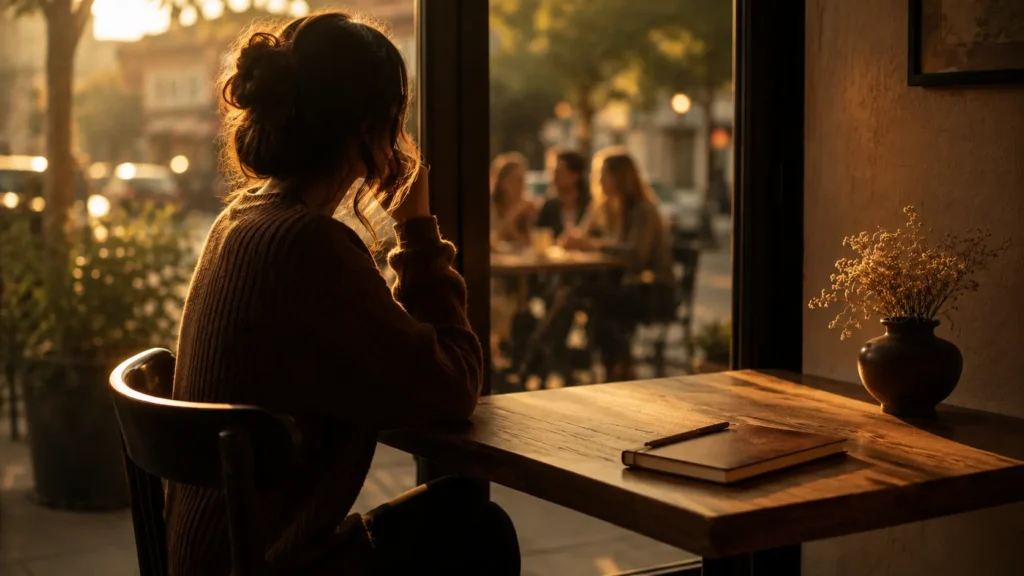
Sometimes, the most peaceful seat is the one you choose not to fill just to please someone else
For a long time, I believed saying “yes” made me a kind person.
I didn’t want to disappoint anyone.
I didn’t want people to think I was rude.
So, even when something didn’t feel right, I smiled and said yes.
One memory from my college days still stays with me.
A girl I considered a close friend invited me to a popular café with some of her other friends. At that time, it felt like a big opportunity to fit in, so I agreed without thinking twice.
The moment I reached there, I knew I didn’t belong.
No one was openly rude, but I could feel that I wasn’t truly included. Conversations happened around me instead of with me, and I spent most of the time feeling invisible and uncomfortable.
I came home that day and cried.
For a long time, I blamed the people around me.
But when I look back today, I realize the biggest lesson wasn’t about them.
It was about me.
The real mistake wasn’t accepting the invitation.
The real mistake was ignoring the quiet voice inside me that was already saying, “You don’t have to go if this doesn’t feel right.”
At that time, I was looking for acceptance from other people because I hadn’t fully accepted myself yet.
And when we don’t value our own feelings, we often sacrifice our peace just to avoid disappointing someone else.
That’s why learning to say “no” is one of the healthiest things you can do for yourself.
Saying no doesn’t mean you’re selfish.
It doesn’t mean you don’t care about people.
It simply means you’re respecting your time, your emotional well-being, and your personal boundaries.
You don’t have to explain yourself every time.
A simple,
“Thank you, but I already have other plans,”
or,
“I won’t be able to make it this time,”
is enough.
The people who genuinely respect you will respect your boundaries too.
And those who become upset simply because you chose yourself were never expecting love—they were expecting unlimited access to your time and energy.
Protecting your peace sometimes begins with one small word:
No.
It may feel uncomfortable for a few minutes.
But saying yes when your heart is screaming no can leave you carrying regret for much longer.
LUS Reflection
Every time you say “yes” just to keep someone else happy, ask yourself one question: “What is this yes costing me?”
Sometimes, the kindest thing you can do for yourself is to say one honest word—No.
Tip 4: Protect Your Energy From Negative People—Not Every Voice Deserves a Place in Your Mind

Not everyone deserves unlimited access to your energy. Protect your peace by choosing what—and who—you allow into your life.
One of the most peaceful lessons life has taught me is this:
Not everyone deserves unlimited access to your energy.
There was a time when I believed I had to keep everyone happy, stay available for everyone, and patiently listen to every opinion or piece of advice that came my way.
I thought that was kindness.
Today, I know better.
Some people don’t accept you for who you are. They accept you only as long as you fit their expectations, support their choices, or serve a purpose in their lives. The moment you begin thinking differently, setting boundaries, or choosing yourself, their behavior often changes.
That realization can be painful, but it’s also incredibly freeing.
Over time, I also realized something else.
Many people carry unresolved pain, disappointments, and emotional wounds of their own. Sometimes, the negativity they spread has very little to do with you and everything to do with what they haven’t healed within themselves.
Understanding this helped me stop taking everything personally.
But understanding someone doesn’t mean you have to absorb their negativity.
One of the biggest mistakes we make is believing we must explain ourselves to everyone or convince people to understand our perspective.
The truth is, not everyone wants to understand.
Some people simply want to be right.
And when someone has already decided not to listen, continuing the conversation only drains your peace.
Now, when I find myself in conversations filled with unnecessary criticism, constant negativity, or advice I never asked for, I don’t waste my energy trying to win the argument.
Sometimes, I simply smile, politely acknowledge what they’ve said, and move on.
Not because they were right.
But because my peace is worth more than proving a point.
As I’ve grown, I’ve learned to be more intentional about the people I allow into my emotional space.
I choose people who inspire growth instead of fear, understanding instead of judgment, and encouragement instead of constant criticism.
Because the people around you quietly shape the way you think, feel, and see yourself.
Protecting your energy doesn’t mean isolating yourself from the world.
It means becoming mindful of what you allow to live rent-free in your mind.
You can’t stop people from being negative.
But you can stop giving their negativity a permanent home inside you.
LUS Reflection
You don’t have to carry someone else’s negativity just because they handed it to you.
Protect your energy the way you protect your home—not everyone deserves a key.
Tip 5: Why Protecting Your Peace Isn’t Selfish

Sometimes, protecting your peace simply means choosing a different path—and that’s not selfish.
For the longest time, I believed that saying “no” would hurt people.
I worried that if I declined an invitation, refused a favor, or chose to spend time on myself, people would think I had changed. They might stop calling, stop including me, or misunderstand my intentions.
So, I kept saying yes—even when I wanted to say no.
Looking back, I realize I wasn’t protecting relationships.
I was protecting other people’s expectations of me.
Over time, I learned something that completely changed my perspective.
Protecting your peace isn’t selfish.
There is a big difference between setting healthy boundaries and being selfish.
Being selfish means expecting people to help you whenever you need them, but disappearing when it’s your turn to show up. It means using people only when it’s convenient for you.
Protecting your peace is different.
It means recognizing your emotional limits, respecting your time, and making thoughtful decisions instead of saying yes out of guilt.
I learned this through my own experiences.
There were times when I asked people for favors, and naturally, they expected the same from me later. I happily helped whenever I genuinely could. But I also realized that constantly depending on each other can slowly create expectations that neither person ever intended.
That’s when I started doing something different.
Whenever possible, I began handling my own work.
Not because I wanted to distance myself from people.
But because I wanted more freedom, fewer expectations, and a little more peace.
Ironically, the less I depended on others, the less they depended on me.
And life became much simpler.
One of the greatest gifts you can give yourself is learning to enjoy your own company.
You don’t always need someone beside you to visit a café, run an errand, watch a movie, or explore a new place.
The more comfortable you become with yourself, the less pressure you’ll feel to seek constant company or approval.
And when someone asks you for something you genuinely cannot do, remember this:
You don’t need a dramatic explanation.
A kind and respectful response is enough.
“I won’t be able to make it this time.”
“I already have other plans.”
The people who truly care about you won’t measure your love by how often you sacrifice your own peace.
Healthy relationships respect boundaries.
Unhealthy expectations demand constant availability.
Choosing yourself when necessary isn’t selfish.
It’s one of the healthiest forms of self-respect.
LUS Reflection
Protecting your peace isn’t selfish.
Using people only when it’s convenient for you is.
The right people won’t ask you to lose yourself just to make them comfortable.
Tip 6: Daily Habits That Help You Feel Calm and Mentally Strong
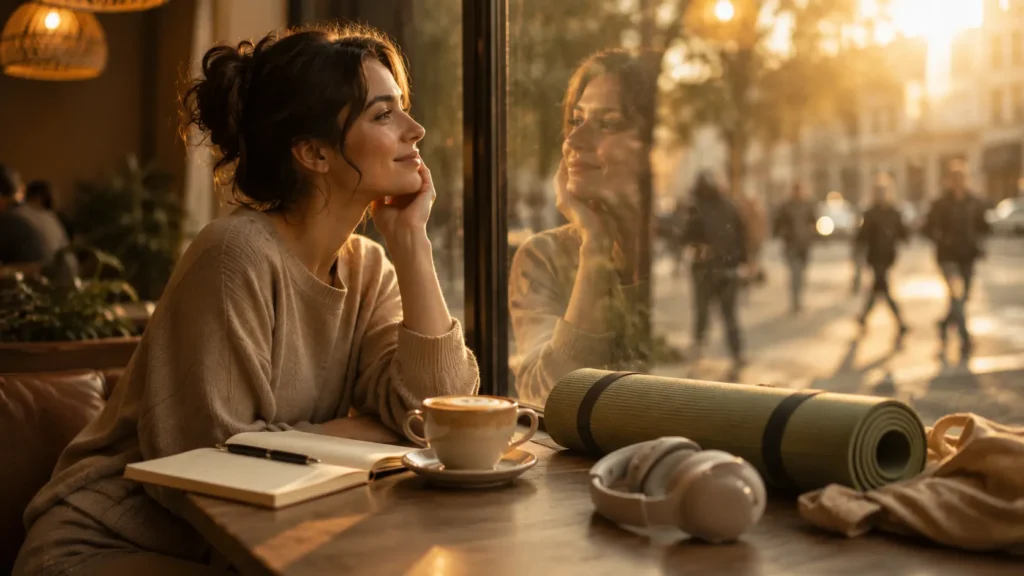
Peace isn’t found overnight. It’s built through the small moments you choose for yourself every day
If someone asked me where my journey toward inner peace truly began, my answer would be simple:
Yoga.
Like many people, I had heard the same advice countless times:
“Try yoga. It helps.”
One day, instead of just hearing it, I decided to experience it.
I didn’t start with an hour-long routine or complicated poses.
I simply gave myself five minutes.
Just five minutes of Anulom Vilom and Kapalbhati.
That’s all.
Those five minutes slowly became one of the best investments I ever made in myself.
The more consistent I became, the calmer I felt. Gradually, I explored different yoga asanas, and today, yoga isn’t just part of my routine—it’s part of who I am.
On the days I miss it, I don’t just feel physically different. I feel mentally unsettled too.
But yoga wasn’t the only habit that transformed me.
At one point in my life, I joined swimming classes, basketball sessions, and dance classes for a completely different reason—I wanted to increase my height.
Well… my height didn’t change.
But my life did.
Those activities gave me something I never expected.
They became a healthy place for my stress, frustration, and emotions to go.
I didn’t realize how much I had been carrying inside until I finally started moving my body.
Instead of holding on to anger, I learned to release it.
Instead of overthinking, I found moments where my mind could finally breathe.
Dance became one of my favorite forms of self-expression.
Whenever I dance, I stop worrying about how life looks and start enjoying how life feels.
I still remember one evening after an exhausting day at work.
I was on my way to my swimming class, emotionally drained and mentally exhausted.
Before getting in, I caught my reflection in my phone’s screen.
I smiled.
And quietly said to myself,
“I love you. You’re doing your best.”
Then I stepped into the water.
For me, swimming became therapy.
I left the pool feeling lighter than I had when I arrived.
That day taught me something I’ll never forget.
Sometimes, the person who needs your kindness the most is the one staring back at you in the mirror.
Another habit that changed my life was learning to enjoy my own company.
Every once in a while, I take myself out on a solo date.
Just me, a cappuccino, my diary, my favorite songs, and a peaceful corner where I can simply exist without trying to impress anyone.
Those quiet moments remind me that happiness doesn’t always come from being surrounded by people.
Sometimes, it comes from feeling completely at home with yourself.
And if you’re reading this thinking,
“That sounds wonderful, but I don’t have enough time.”
I understand.
Life gets busy.
Some people are raising children.
Some are managing households.
Some work long shifts.
Others are simply trying to make it through each day.
The good news is this:
You don’t need hours.
You just need intention.
Maybe it’s five minutes of deep breathing before bed.
Maybe it’s dancing in your kitchen while dinner is cooking.
Maybe it’s reading a few pages of a book, listening to your favorite songs during your commute, taking a quiet walk, or enjoying one peaceful cup of coffee without distractions.
Your habit doesn’t have to look like someone else’s.
It simply has to make you feel alive.
Because if you truly want more peace in your life, you have to make space for it—even if it’s only a few minutes at a time.
Peace isn’t built in one life-changing moment.
It’s built through the small promises you keep to yourself every single day.
LUS Reflection
Life may not always give you enough free time.
But don’t stop giving yourself moments that remind you you’re alive.
The relationship you build with yourself through small daily habits becomes the foundation of a peaceful life.
Tip 7 : Identify What’s Draining Your Energy

Recognizing where your energy is being drained is the first step toward protecting your peace
Sometimes, we focus so much on finding peace that we forget to ask ourselves a simple question:
Where is my energy going?
Protecting your peace isn’t only about adding healthy habits to your life. It’s also about recognizing the people, situations, and patterns that quietly drain your emotional energy every day.
I remember a phase in my career when I was constantly busy. As my responsibilities grew, so did the pressure. My days were filled with meetings, travel, deadlines, and conversations that often revolved around criticism rather than appreciation.
The workload wasn’t the only thing exhausting me.
What drained me even more was replaying those conversations in my mind long after they had ended. Then I’d discuss the same frustrations with colleagues, relive the negativity, and carry that emotional weight home. Without realizing it, I was spending more energy thinking about stressful moments than actually living my life.
That was the moment I asked myself:
“Where is my energy actually going?”
The answer changed everything.
I realized that protecting my peace didn’t necessarily mean changing everything overnight. It meant becoming aware of what was silently stealing my energy and deciding what I could change.
I tried not to give every negative comment so much power over my mind. I looked for ways to create space for myself, but eventually I also accepted that my work-life balance no longer aligned with the life I wanted. Choosing a role that gave me time for the things I genuinely love wasn’t giving up—it was protecting my peace.
Your energy leaks may look different from mine.
Maybe you’re constantly overthinking.
Maybe you’re trying to please everyone.
Maybe you’re surrounded by negativity.
Or perhaps every conversation with a certain person revolves around complaints, blame, or problems, leaving you emotionally exhausted.
Listening to someone occasionally is part of being compassionate. But if every interaction leaves you feeling heavier than before, it’s worth asking yourself whether that relationship is nourishing your peace or quietly draining it.
The truth is, not every energy drain comes from a difficult situation. Sometimes it comes from habits, conversations, and relationships we’ve accepted as normal.
The first step to protecting your peace is becoming aware of what’s quietly taking it away.
Once you identify your energy leaks, you can start making choices that protect your mind instead of constantly exhausting it.
LUS Reflection
You can’t protect your peace until you recognize what’s quietly draining your energy.
Tip 8: Recharge Your Mind and Soul
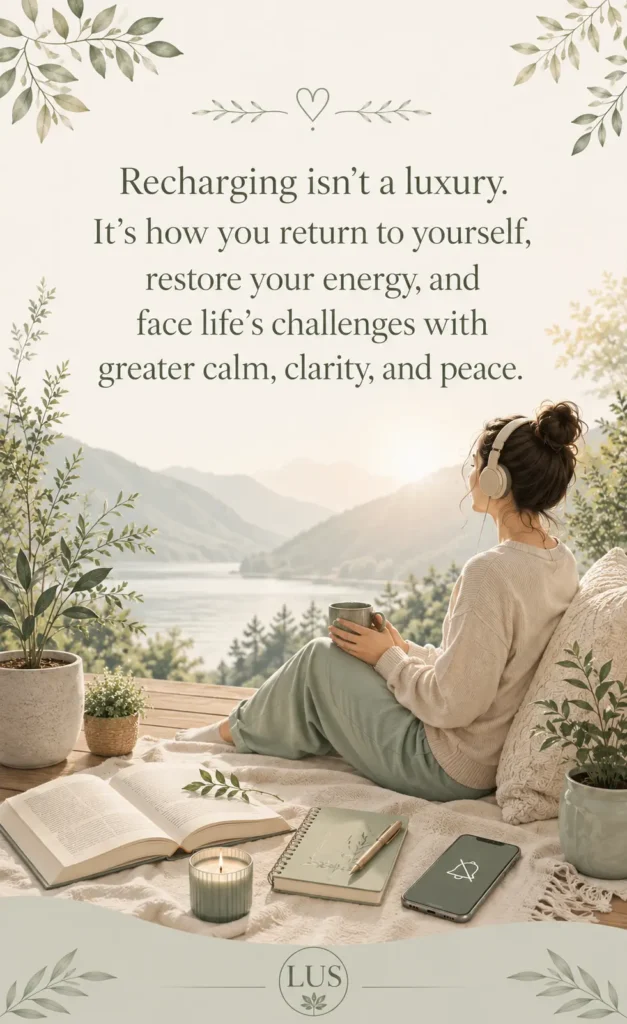
Protecting your peace isn’t just about avoiding negativity. It’s also about giving yourself the time and space to recharge.
When we think about feeling drained, we often blame difficult people, long office meetings, or family conflicts. But the truth is, even endless scrolling, constant notifications, and information overload can quietly drain our mental and emotional energy.
I’m not saying you should stop talking to people or completely quit social media. That’s neither realistic nor necessary.
Instead, ask yourself this simple question:
“What helps me feel like myself again?”
The answer is different for everyone. For some, it’s listening to music. For others, it’s reading a book, going for a walk, praying, meditating, gardening, painting, exercising, or simply enjoying a quiet cup of tea without any distractions.
Whatever brings you peace, make time for it.
You don’t have to start with an hour. Even 5 to 30 minutes can make a meaningful difference. Try to do it regularly—whether that’s every day, three times a week, or whenever your mind feels overwhelmed. Consistency matters more than perfection.
Think of it this way: just as your phone needs charging to keep working, your mind and soul need moments of rest to keep going too.
Recharging isn’t a luxury. It’s how you return to yourself, restore your energy, and face life’s challenges with greater calm, clarity, and peace.
LUS Reflection
We spend so much time responding to the world that we often forget to reconnect with ourselves.
What is one simple activity that makes you feel calm, happy, or truly like yourself?
This week, give yourself permission to do it—even if it’s just for 5 to 30 minutes. Your mind and soul deserve time to recharge, not just survive.
Tip 9 : Learn to Protect Your Peace During Difficult Situations

Inner peace isn’t tested during calm moments—it’s revealed in the middle of chaos
It’s easy to feel peaceful when life is going well.
The real challenge begins when life tests your patience.
In many ways, this tip brings together everything we’ve talked about so far. Setting boundaries, letting go, protecting your energy, and practicing self-awareness all prepare you for one thing—staying calm when life becomes difficult.
I’m not saying it’s easy.
I’m not saying you’ll always get it right.
But every time you choose peace over an emotional reaction, you’ve already won a battle within yourself.
Think about a simple everyday situation.
You’re driving, and another driver suddenly cuts you off. Maybe they were driving recklessly. Maybe the mistake wasn’t even yours. Yet they roll down their window and start shouting at you.
Your first instinct will probably be to react.
You’ll want to defend yourself.
You’ll want to prove that you’re right.
You’ll want the last word.
But before reacting, ask yourself one simple question:
“Is this argument worth my peace?”
If you’re standing in the middle of traffic, reacting emotionally won’t just affect you—it may create more stress for everyone around you.
Sometimes, the wisest response is not saying nothing because you’re weak.
It’s choosing not to give your peace away for a moment that doesn’t deserve it.
The same principle applies beyond the road.
Someone criticizes you at work.
A family member says something hurtful.
A stranger leaves a negative comment online.
Not every difficult situation deserves an immediate reaction.
Often, we react because our ego wants to prove something. We want to show that we’re right, that we’re strong, or that we won’t let anyone “win.”
But real strength isn’t measured by how quickly you react.
It’s measured by how wisely you respond.
Whenever you feel anger taking over, give yourself permission to pause.
Take a few deep breaths.
Walk away for a moment.
Distract yourself.
If needed, sleep on it before making an important decision.
The goal isn’t to suppress your emotions.
The goal is to stop your emotions from making decisions for you.
Will you react perfectly every single time?
Probably not.
Neither do I.
But every time you pause instead of reacting immediately, you’re training your mind to protect your peace a little better than yesterday.
And eventually, that pause becomes a habit.
Whenever life puts you in a difficult situation, remind yourself:
“I don’t have to be the hero in every argument.”
Some battles simply aren’t worth your energy.
Some victories come from walking away, not from winning the argument.
LUS Reflection
Protecting your peace doesn’t mean avoiding difficult situations. It means choosing a response you’ll still be proud of tomorrow.
Tip 10: Trust the Process, Even When Life Feels Uncertain

Life is beautifully unpredictable. Sometimes everything goes exactly as we planned, and sometimes life takes a turn we never saw coming. Those unexpected moments can leave us feeling shocked, disappointed, or completely lost. We keep asking ourselves, “Why is this happening?” or “This wasn’t supposed to happen.”
The truth is, we can’t control every situation—but we can choose how we respond to it.
That’s where protecting your peace becomes your greatest strength.
When life feels overwhelming, you’ll naturally come back to the habits you’ve built. You’ll protect your energy instead of wasting it. You’ll choose people who bring calm instead of chaos. You’ll stop carrying every burden that isn’t yours. Most importantly, you’ll begin to value your mind and your inner peace more than the need to control every outcome.
And slowly, something beautiful begins to happen.
The situation may not change overnight, but you do.
You stop reacting to everything.
You start responding with clarity.
You stop chasing certainty.
You start trusting yourself.
Because a peaceful mind doesn’t make life perfect—it helps you face an imperfect life with greater wisdom.
Think of your mind as a room where too many voices are speaking at the same time. Fear wants one thing, anger wants another, overthinking keeps asking questions, and expectations refuse to stay quiet. In that noise, it’s almost impossible to hear your own inner voice. Protecting your peace isn’t about silencing the world; it’s about creating enough quiet within yourself to finally hear what truly matters.
There will always be shortcuts that promise quick happiness or an escape from pain. They may feel easier in the moment, but lasting peace is rarely built on quick fixes. It grows quietly through patience, self-respect, healthy choices, and the small daily habits that often go unnoticed.
At first, this journey may feel difficult. You might wonder if it’s even working. But one day, you’ll notice that the things which once disturbed you no longer have the same power over you. You’ll smile a little easier, sleep a little better, and carry a little less emotional weight.
That’s when you’ll realize something important.
Protecting your peace was never about changing your life overnight. It was about changing the way you walk through life.
Maybe life won’t always go according to your plans. Maybe some doors will close. Maybe some people won’t stay. Maybe some dreams will change. But that doesn’t mean life is going against you. Sometimes, it’s quietly shaping you into someone stronger, wiser, and more compassionate.
LUS Reflection
Protecting your peacedoesn’t mean avoiding difficult situations. It means choosing a response you’ll still be proud of tomorrow. Life may not always go according to your plans, but every time you choose peace over panic, clarity over chaos, and growth over fear, you’re quietly becoming a stronger, wiser version of yourself.
One day, you’ll look back and realize that the greatest thing life gave you wasn’t the outcome you were waiting for—it was the person you became while waiting for it.
Trust the process. Protect your peace. Keep moving forward.
Because in the end, peace isn’t something you find. It’s someone you become.











[…] my previous article, How to Protect Your Peace, I mentioned that protecting your peace isn’t a one-time decision. It is something you choose […]
[…] to Find Inner Peace in a Busy World : If you’ve been following this Protect Your Peace series, we’ve already explored how to protect your peace, recognize the signs of people […]