Karwa Chauth 2026
Karwa Chauth is one of the most meaningful festivals in Indian culture, celebrated through prayers, fasting, traditional rituals and family gatherings. For many married Hindu women, it is a day dedicated to praying for their husbands’ well-being, longevity and the happiness of their married lives. Yet, the festival also carries a deeper meaning through the relationships, faith and family traditions that connect generations.
In many Indian households, preparations begin well before sunrise. Mothers-in-law lovingly prepare Sargi for their daughters-in-law, women decorate their hands with mehendi, beautifully arranged puja thalis become part of the celebrations, and families come together to listen to the traditional Karwa Chauth vrat katha. As evening approaches, the wait for the Moon brings a special feeling of devotion and anticipation.
But Karwa Chauth is more than a collection of rituals. It is also an opportunity to understand the cultural stories passed down through generations and the values families associate with love, commitment and faith.
At Life Unfiltered Stories, we believe that traditions become more meaningful when we understand their significance rather than following them without knowing their purpose. This guide explores Karwa Chauth 2026, including its date, religious significance, traditional vrat katha, Sargi, puja vidhi, important customs, dos and don’ts, and frequently asked questions.
When Is Karwa Chauth in 2026?
Karwa Chauth will be celebrated on Thursday, 29 October 2026.
The festival is observed on Chaturthi, the fourth day of the Krishna Paksha, or waning phase of the Moon, in the Hindu lunar calendar. Depending on the calendar convention, the lunar month may be referred to as Kartik or Ashwin.
| Festival detail | Information |
|---|---|
| Festival | Karwa Chauth 2026 |
| Date | Thursday, 29 October 2026 |
| Tithi | Krishna Paksha Chaturthi |
| Main rituals | Evening puja, vrat katha and traditional Moon worship |
| Fast traditionally concluded | After the Moon is sighted and the prescribed rituals are completed |
Karwa Chauth puja muhurat and moonrise time
Published Panchang calculations give an indicative evening puja window of approximately 5:38 PM to 6:56 PM for this date. In Chandigarh, moonrise is expected at approximately 8:12 PM.
These timings are location-dependent. Readers should check the Panchang for their own city before planning the puja, as moonrise and auspicious timings can differ across India. Weather, buildings and the local horizon may also affect when the Moon becomes visible.
What Is Karwa Chauth and Why Is It Celebrated?
Karwa Chauth is a traditional Hindu festival observed particularly by married women in many North Indian communities. Women traditionally keep a fast and pray for their husbands’ well-being, longevity and the harmony of their married lives.
The word Karwa is commonly associated with the earthen pot used during the rituals, while Chauth refers to the fourth lunar day. The karwa has an important place in the puja, and water offered during Moon worship is part of many customary observances.
However, the meaning of Karwa Chauth extends beyond the objects used in the ceremony. The festival brings together devotion, family relationships, cultural memory and rituals that elders teach to younger generations.
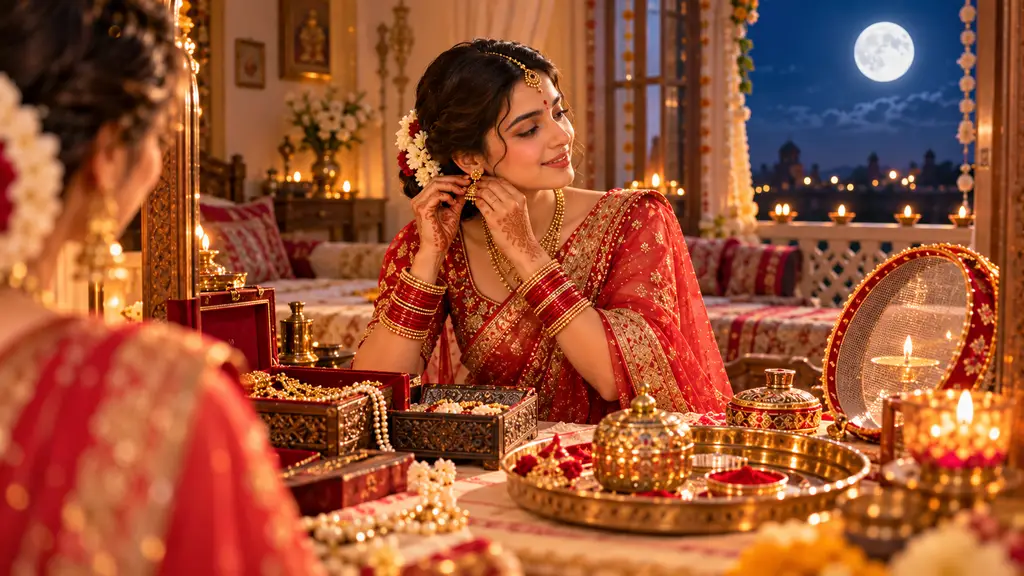
In many households, a mother-in-law gives Sargi to her daughter-in-law before the fast begins. Women may exchange decorated thalis, gather for the vrat katha, apply mehendi and dress in traditional attire. These customs help preserve a sense of continuity between generations.
Every family may celebrate differently. Some observe all the traditional rituals, while others follow a simpler form of worship. Understanding these differences is important because cultural traditions can vary by region, community and family.
The Spiritual Significance of Karwa Chauth: Shiv and Shakti
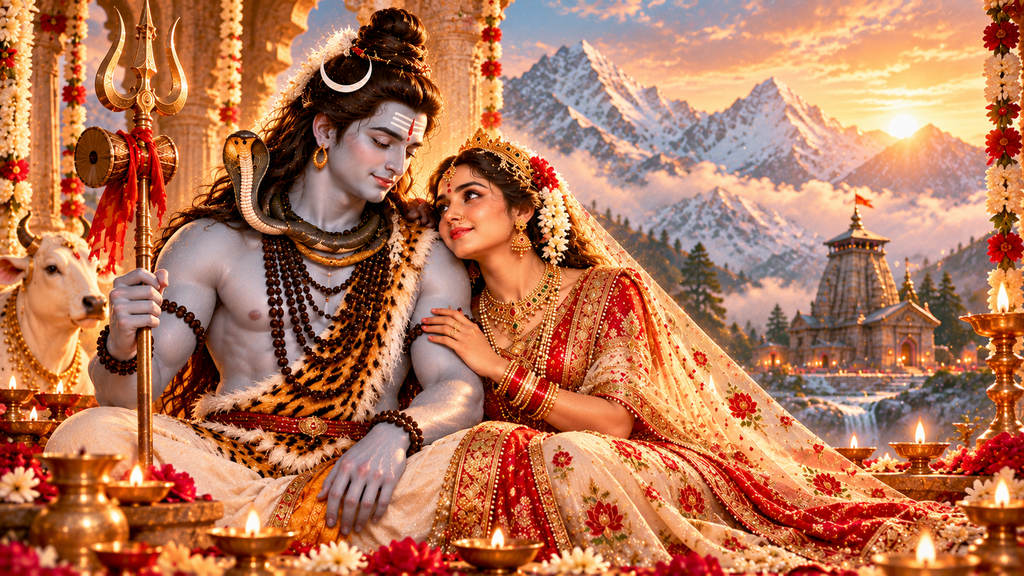
For devotees who look towards Lord Shiva and Maa Parvati for spiritual guidance, the idea of Shiv-Shakti offers a meaningful way to reflect on the festival.
In Hindu traditions, Shiva and Shakti represent complementary divine principles. Shiva is associated with consciousness, while Shakti represents divine energy and power. Their union is a recurring theme in Hindu spiritual thought, symbolising a relationship between complementary forces rather than a separation between them.
Maa Parvati is also revered as a symbol of devotion, strength and determination. Stories associated with her tapasya and her union with Lord Shiva have inspired generations of devotees.
Karwa Chauth is not exclusively a Shiv-Parvati festival in every regional tradition, but many families include Shiva, Parvati, Ganesha and other deities in their prayers. The specific deities and the sequence of worship may differ according to the family’s customary practices.
The spiritual lesson we can take from these traditions is that a sacred relationship is not sustained by rituals alone. Care, patience, mutual respect, responsibility and emotional support are also important parts of a lasting partnership.
For devotees, the festival becomes an occasion to express faith through prayer. For families, it can become a moment to appreciate the relationships that make a home feel connected.
The Traditional Karwa Chauth Vrat Katha: The Story of Veeravati
One of the best-known stories associated with Karwa Chauth is the traditional vrat katha of Veeravati. The story is passed down in different versions, so some details may differ depending on the text or regional tradition.
According to a popular telling, Veeravati was a devoted woman who observed a fast for the well-being of her husband. She was deeply attached to her family and had several brothers who loved her dearly.
On Karwa Chauth, Veeravati began her fast and waited for the Moon to appear. As the hours passed, she grew increasingly weak and hungry. Her brothers became worried when they saw how difficult the fast had become for her.
Wanting to end their sister’s suffering, the brothers devised a way to make her believe that the Moon had risen. In some versions, they created the appearance of moonlight using a light or a reflection visible from a distance.
Veeravati believed that the Moon had appeared. She performed the customary concluding actions and broke her fast. However, the story then takes a tragic turn: she learns that her husband has died or has suffered a terrible misfortune.
Overcome with grief, Veeravati seeks an explanation and guidance. In popular versions, a divine or spiritually wise figure explains that the fast was interrupted before the proper time. Veeravati is then instructed to observe the vrat again with sincere devotion and the prescribed rituals.
Through her perseverance, the story reaches a hopeful conclusion in which her husband is restored to life or her misfortune is overcome, depending on the version being told.
What Does the Veeravati Story Teach Us?
The traditional story is commonly understood as a lesson about devotion, patience, sincerity and following the observances prescribed within a particular vrat tradition.
Its emotional power comes from the love between Veeravati and her husband, the concern of her brothers and the belief that sincere devotion can sustain a person through hardship.
It is important to remember that a vrat katha is a religious and cultural narrative. Different tellings contain different details, and readers should not confuse every element of a popular folk story with independently established historical fact.
The purpose of sharing the story is to understand its place in the tradition and the values devotees draw from it.
The Story of Karwa and the Crocodile
Another folk story associated with Karwa Chauth tells of a devoted woman named Karwa.
In a popular version, Karwa’s husband encounters a crocodile while bathing in a river. Karwa responds with courage and devotion, seeking divine assistance to protect her husband. Her determination becomes central to the story, which is remembered as an expression of loyalty, faith and strength.
Versions of this tale vary, and it is not always included in the same way in every family’s Karwa Chauth observance.
Together, these stories illustrate how traditional vrat kathas use memorable characters and dramatic events to express the importance of devotion, courage and commitment.
What Is Sargi? Meaning, Timing and Traditional Foods
Sargi is an important pre-dawn tradition associated with Karwa Chauth, particularly in many Punjabi and North Indian households.
Traditionally, a mother-in-law prepares or gives Sargi to her daughter-in-law. It is eaten before the fast begins, usually in the early morning hours before sunrise, according to the family’s customary practice.
For many families, Sargi is more than a meal. It represents affection, blessings and the relationship between a mother-in-law and daughter-in-law. It is also one of the clearest examples of how Karwa Chauth connects family members across generations.
What Is Traditionally Included in Sargi?
Depending on the family and region, Sargi may include:
- Fruits such as apples, bananas or pomegranates.
- Dry fruits and nuts.
- Sweets or traditional homemade delicacies.
- Roti, paratha or other prepared foods.
- Milk, curd or other customary drinks.
- Savoury foods chosen according to family preference.
There is no single universal Sargi menu. Families adapt it to their traditions, dietary preferences and practical needs.
What Should You Keep in Mind While Eating Sargi?
Choose foods that you tolerate well and that provide nourishment. Fruit, suitable sources of protein, nuts and a balanced meal may help make the pre-dawn meal more satisfying.
Drink water before the fast begins if your fasting practice permits it. Avoid assuming that every woman must eat exactly the same foods or quantities.
People with diabetes, kidney disease, pregnancy, a history of fainting, or other health concerns should seek personalised medical advice before undertaking prolonged fasting, particularly a fast without water. Medication schedules should not be changed without professional guidance.
Religious devotion should not require anyone to disregard a serious health concern.
Karwa Chauth Puja Samagri: What Do You Need?
The puja samagri varies between households, but the following items are commonly used in many North Indian traditions:
- Karwa or an earthen pot containing water.
- A puja thali.
- Diya and suitable lighting materials.
- Roli or kumkum, rice and flowers.
- Incense, where customarily used.
- Sweets or other traditional offerings.
- A sieve for the customary Moon-viewing ritual.
- A small vessel for offering water to the Moon.
- A printed or remembered vrat katha.
- Items required by the family’s specific puja tradition.
Some families also include images or idols of Lord Shiva, Maa Parvati, Lord Ganesha and other deities.
Prepare the items in advance so that the evening puja can be performed calmly. If you are following a specific family or regional tradition, confirm the required items with an elder or a knowledgeable priest rather than assuming that every household follows an identical list.
Karwa Chauth Puja Vidhi: Step-by-Step Guide
The exact sequence of Karwa Chauth rituals varies by region and family. The following is a general overview of practices followed in many North Indian households, not a compulsory sequence for every devotee.
Step 1: Prepare for the Fast
Women who observe the traditional fast usually eat Sargi before sunrise. The fast is then continued according to their customary practice.
Prepare your puja space and arrange the items you will need later in the day.
Step 2: Get Ready for the Festival
Many women apply mehendi, wear traditional clothes and jewellery, and prepare their puja thalis. Red, maroon and other festive colours are popular in many households, although no particular outfit is essential to the spiritual meaning of the day.
These preparations can be a joyful way of celebrating culture, family and personal expression.
Step 3: Arrange the Puja Thali
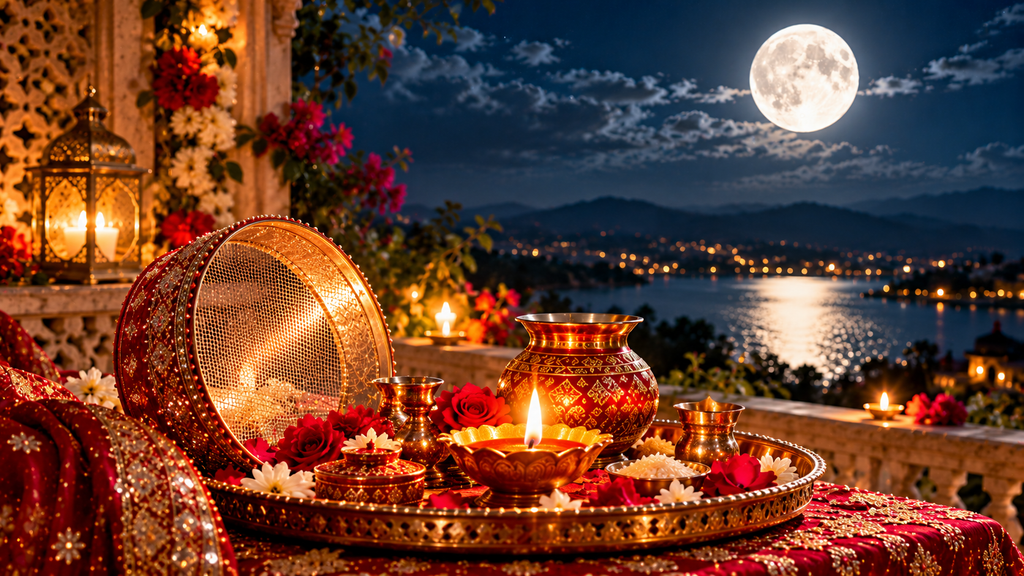
Arrange the karwa, diya, roli, rice, flowers, offerings and other customary items. Make sure the items are suitable for your family’s ritual practice.
Some communities prepare the thali according to a particular regional custom or include specific offerings that have been passed down within the family.
Step 4: Perform the Evening Puja
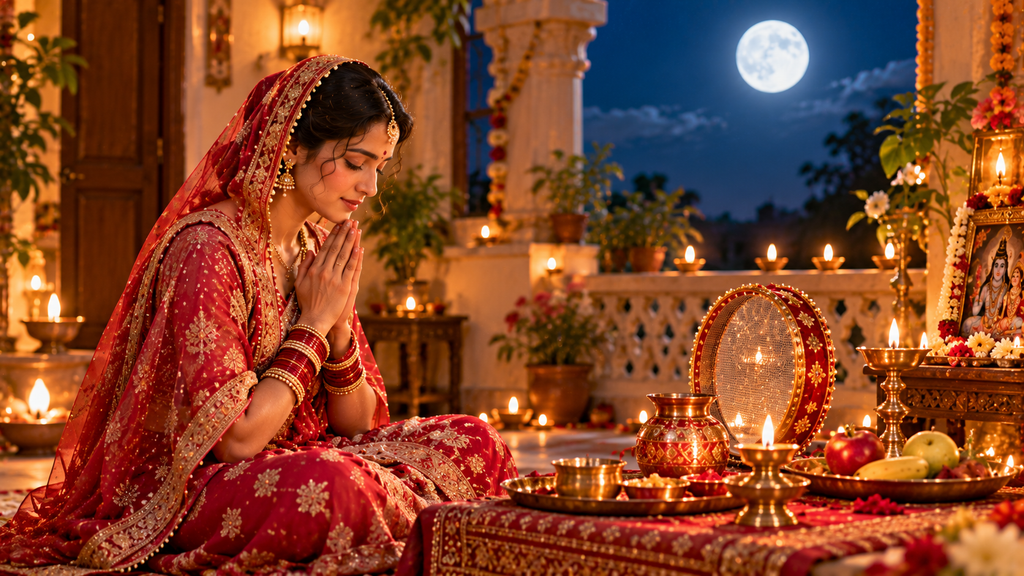
At the prescribed local time, devotees commonly worship Goddess Parvati, Lord Shiva, Lord Ganesha and other deities according to their tradition.
Prayers may be offered for the well-being of the husband, harmony in married life and the happiness of the family.
Step 5: Listen to the Karwa Chauth Vrat Katha
Listening to or reciting the vrat katha is an important part of many families’ observance. Women may gather together, listen to an elder or priest, and participate in customary thali rituals.
In some Punjabi households, the katha and thali exchange take place in the afternoon; in others, the timing differs. Follow the practice customary in your family.
Step 6: Wait for the Moon
After the evening rituals, families traditionally wait for the Moon to become visible. The precise time depends on the location and the day’s astronomical conditions.
Do not rely on a moonrise time published for another city.
Step 7: Perform the Moon Ritual
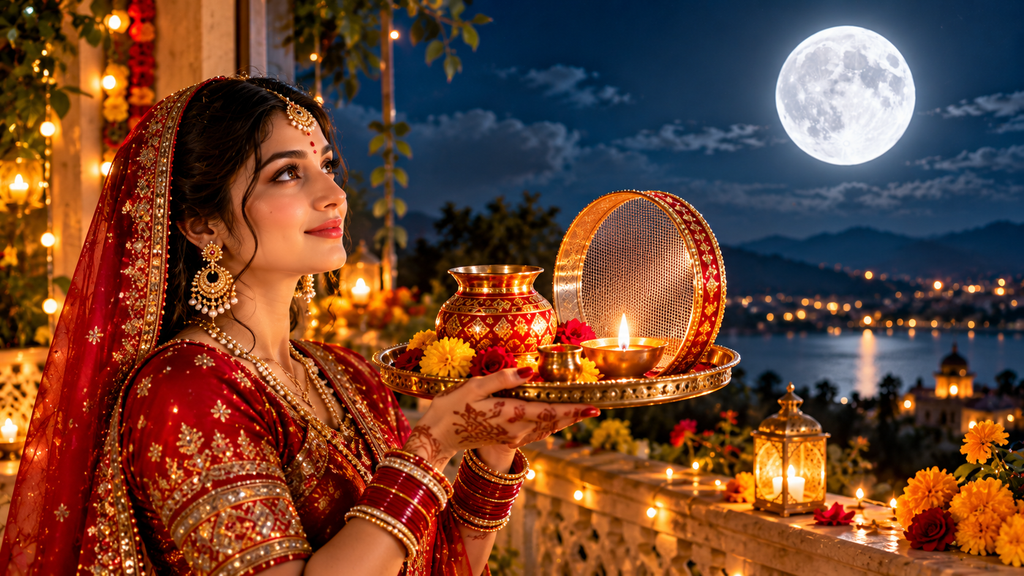
In many households, women view the Moon through a sieve and then look towards their husbands. Water is offered to the Moon as part of the customary ritual, and prayers are made before the fast is concluded.
The precise sequence of looking through the sieve, offering arghya and performing other actions varies. Follow your family’s customary method rather than assuming one version is mandatory everywhere.
Step 8: Conclude the Fast
Traditionally, the fast is concluded after the Moon is sighted and the prescribed rituals have been completed.
Many women then drink water and eat a meal. After a prolonged fast, it is sensible to begin gently and avoid eating an excessively large meal immediately.
Karwa Chauth Dos and Don’ts
Karwa Chauth customs carry religious and emotional significance for many families. At the same time, regional differences mean that not every instruction is universal.
Do’s: Practices to Keep in Mind
1. Check the date and local puja timings.
Use a reliable Panchang for your city rather than copying timings from a different location.
2. Prepare Sargi and puja items in advance.
Planning ahead makes the day less stressful and helps families follow their customary rituals.
3. Understand your family’s vrat tradition.
Ask an elder or knowledgeable priest if you are unsure about the sequence of the puja, the vrat katha or the Moon ritual.
4. Listen to the vrat katha with attention.
For devotees, the story provides a way to connect with the values and beliefs associated with the observance.
5. Keep the ritual space organised and safe.
Place diyas securely, keep flames away from loose fabric and never leave an open flame unattended.
6. Take your health seriously.
Plan the fast with your individual health needs in mind. Seek medical guidance if you have a condition or take medication that could make fasting unsafe.
7. Respect different choices and traditions.
Some women observe a strict fast, some follow a modified observance, and others do not fast. Families can honour their traditions without pressuring someone to participate.
Don’ts: Things to Avoid
1. Do not assume that every family follows identical rules.
Customs around Sargi, clothing, puja materials and the sequence of rituals may differ.
2. Do not present popular beliefs as universal religious laws.
If a practice belongs to a particular region or family tradition, identify it as such.
3. Do not ignore serious symptoms during a fast.
Fainting, confusion, severe weakness or other concerning symptoms should not be dismissed as a test of devotion. Seek appropriate medical assistance.
4. Do not change prescribed medication without medical advice.
If fasting affects the timing of medicines or food intake, consult the treating healthcare professional beforehand.
5. Do not force anyone to observe the vrat.
Faith is personal. A person’s love, character or commitment cannot be measured solely by whether they fast.
6. Do not create unnecessary fear around ordinary variations.
If you are unsure about a ritual, ask someone knowledgeable in your tradition rather than relying on alarming social-media claims.
7. Do not treat a ritual as a substitute for a caring relationship.
Respect, honesty, safety and mutual responsibility matter throughout the year, not only during a festival.
Can Karwa Chauth Be Observed Without a Nirjala Fast?
A traditional Nirjala fast involves abstaining from both food and water. Many people associate this form of fasting with Karwa Chauth, but individual practices and interpretations differ.
Some devotees follow a strict fast, while others observe the day in a modified way because of personal circumstances, family traditions or health needs.
There is no responsible reason to suggest that someone must put their health at risk to prove their faith. People who are pregnant, have a medical condition, take regular medication or have previously experienced complications with fasting should seek appropriate medical advice before deciding how to observe the festival.
If someone cannot fast, they may wish to participate in prayers or other customary rituals in a way that is appropriate for them and their tradition. For specific religious questions, a trusted and knowledgeable spiritual guide can explain the practices followed within that community.
What If the Moon Is Not Visible on Karwa Chauth?
Cloud cover, haze, buildings or the local horizon can make the Moon difficult to see even when astronomical moonrise has occurred.
If the Moon is not visible, families may follow different customary practices. Some wait for visibility, while others consult a local priest or follow guidance from their regional Panchang or established family tradition.
There is no need to assume that every family must follow one identical solution. Check the local conditions and follow reliable guidance consistent with your customary observance.
A published moonrise time is an astronomical estimate, not a guarantee that the Moon will be immediately visible from every home.

The Modern Meaning of Karwa Chauth: Love, Faith and Family
Every generation inherits traditions from the people who came before it. Some traditions are preserved through stories, others through festivals, food, prayers and the small gestures that families repeat year after year.
Karwa Chauth brings many of these elements together. The Sargi given by a mother-in-law, the mehendi applied in preparation for the celebration, the thalis arranged with care and the shared listening of the vrat katha all create opportunities for family members to connect.
For many women, the festival is a personal expression of love and faith. For others, its importance lies in family memories, cultural identity or the chance to participate in a tradition that has been part of their lives since childhood.
It is also possible to appreciate the festival while recognising that relationships require care from both partners. Love is expressed through everyday actions: listening to one another, sharing responsibilities, showing respect, offering support and standing together during difficult times.
The most meaningful traditions are those that help people feel connected without making them feel afraid or inadequate. A family can preserve its customs while allowing room for different circumstances, beliefs and choices.
At Life Unfiltered Stories, we see Karwa Chauth as an opportunity to understand not only a religious observance, but also the bonds that connect families across generations. Learning the meaning behind a tradition gives us a better chance of passing its knowledge on thoughtfully and accurately.
Frequently Asked Questions About Karwa Chauth 2026
1. When is Karwa Chauth in 2026?
Karwa Chauth falls on Thursday, 29 October 2026. The festival is observed on Krishna Paksha Chaturthi, and local puja and moonrise timings should be checked for the city where the rituals will be performed.
2. What is the significance of Karwa Chauth?
Karwa Chauth is traditionally observed by many married Hindu women through fasting and prayers for their husbands’ well-being and longevity. It also carries cultural significance through family relationships, devotion and traditions passed down through generations.
3. What is the Karwa Chauth vrat katha?
The Veeravati story is one of the best-known vrat kathas associated with Karwa Chauth. It is a traditional religious narrative about devotion, patience and the consequences of prematurely ending the fast. Different versions contain different details.
4. What is Sargi, and who gives it?
Sargi is the pre-dawn meal eaten before the fast begins. In many Punjabi and North Indian families, the mother-in-law gives Sargi to her daughter-in-law as a gesture of affection and blessings.
5. What items are needed for Karwa Chauth puja?
Common items include a karwa, puja thali, diya, roli, rice, flowers, offerings and a sieve. The exact list varies according to regional and family customs.
6. Why is a sieve used during Karwa Chauth?
In many North Indian traditions, a woman views the Moon through a sieve and then looks towards her husband as part of the concluding ritual. The precise sequence and interpretation may vary between families.
7. Can unmarried women observe Karwa Chauth?
Some unmarried women observe Karwa Chauth according to their personal beliefs or family customs, while others do not. The practice is not identical across communities, so anyone seeking a religious ruling should consult a knowledgeable guide familiar with their tradition.
8. Is it necessary to observe a Nirjala fast?
Nirjala fasting is followed in many traditional observances, but practices vary. Anyone with a medical condition, pregnancy, medication needs or other health concerns should seek professional advice rather than undertake a potentially unsafe fast.
9. What should I do if the Moon is not visible?
Clouds and local surroundings may prevent the Moon from being seen. Families follow different customary practices in this situation, so consult the local Panchang or a trusted religious guide for advice consistent with your tradition.
10. Is Karwa Chauth only about the husband and wife?
The traditional vrat centres on the marital relationship, but its wider cultural celebration often includes mothers-in-law, daughters-in-law, siblings and other family members. The customs surrounding Sargi, puja and shared gatherings can strengthen the sense of connection between generations.

Final Thoughts: Keeping the Meaning of Karwa Chauth Alive
Karwa Chauth is a festival of faith, devotion, stories and traditions that have travelled through generations. Its significance lies not only in the fast itself, but also in the prayers, relationships and cultural memories that families associate with the day.
Understanding the vrat katha, knowing the purpose of the rituals and learning how customs differ between communities can help us celebrate with greater awareness.
As we pass these traditions on to the next generation, let us pass on their knowledge with care, distinguish established customs from regional variations, and make space for compassion and mutual respect.
May Karwa Chauth 2026 bring peace, happiness, understanding and togetherness to every family celebrating it.
At Life Unfiltered Stories, we believe that when we understand the meaning behind our traditions, we give future generations something more valuable than a ritual: we give them knowledge.